
Shopify Growth Blog
Are B2B eCommerce Solutions Killing Cold Emails?
Another cold email. Another eye-roll. Another delete. Are today’s B2B eCommerce solutions making cold outreach irrelevant? Or are we just doing it wrong? The B2B sales landscape isn't just changing,...
Are B2B eCommerce Solutions Killing Cold Emails?
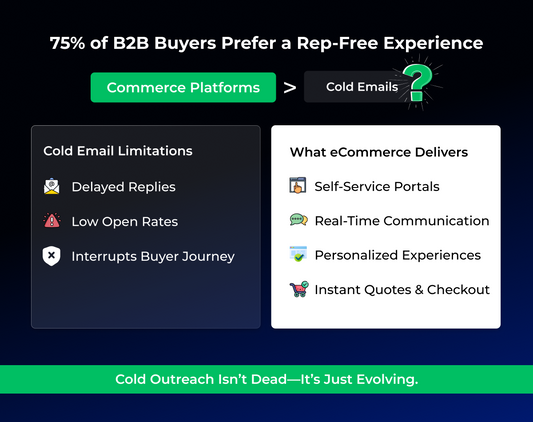
Another cold email. Another eye-roll. Another delete. Are today’s B2B eCommerce solutions making cold outreach irrelevant? Or are we just doing it wrong? The B2B sales landscape isn't just changing, it's evolving at lightning speed. Once upon a time, cold emails were the workhorse of outbound marketing. Sales teams swore by them. Founders drafted them in the wee hours. Marketers A/B tested subject lines until their eyes burned. But today? That cold email might not even get opened. Why? Because the buyer has changed. Today’s B2B buyers are digital-first. They're more informed, more self-reliant, and expect seamless experiences similar to what they get in B2C transactions. In short, the power has shifted from the seller to the buyer. B2B eCommerce solutions, say the platforms, tools, and systems make it possible for buyers to research, customize, and purchase online with minimal friction. But does that mean cold outreach is dead? Not quite. It means it needs to evolve. Let’s unpack what’s really happening. Why cold outreach clashes with today’s buying preferences? Cold emails had their golden age. Before robust eCommerce platforms, cold outreach was one of the only ways to get on a prospect’s radar. But in a 2022 Forrester report, 68% of B2B buyers said they prefer to conduct their own online research before ever speaking with a sales rep. That number has likely increased today. According to Gartner, 75% of B2B buyers prefer a rep-free experience entirely. Let that sink in. People don’t want to be sold to. They want to discover and decide on their own. Cold emails interrupt that journey. Well-built B2B eCommerce platforms, on the other hand, enable it. What B2B eCommerce solutions offer that cold emails can’t? When your eCommerce solution is built with the buyer in mind, it transforms from a passive storefront into an active, always-on sales engine. It doesn’t rely on a sales rep hitting ‘send’ or a prospect opening an email. Instead, it’s working round the clock - guiding, educating, and converting. Here’s how smart B2B eCommerce platforms outshine cold outreach in today’s buyer-first landscape: 1. Self-service capabilities Today’s B2B buyers want to be in control of their purchase journey and that means being able to access what they need, when they need it, without the need for back-and-forth emails or calls. Cold emails often introduce friction by requiring the buyer to request more information, set up a call, or wait for pricing. In contrast, well-designed B2B eCommerce solutions offer a comprehensive self-service portal where users can browse product catalogs, check real-time inventory, compare pricing, and place orders independently. Platforms like Shopify Plus and BigCommerce B2B Edition excel at enabling this seamless experience, empowering buyers to move at their own pace, something cold outreach simply can’t replicate. 2. Personalized buyer journeys The age of one-size-fits-all selling is over. Today’s buyers expect experiences tailored to their specific needs, roles, and industries. While a cold email can attempt to personalize content based on company name or job title, modern eCommerce platforms take personalization to an entirely new level. AI-driven engines can recommend products based on previous purchases, browsing behavior, or business category. Dynamic pricing models can adjust costs based on buyer tiers, volume, or custom contracts. Tools like Adobe Commerce (formerly Magento) enable complex, rule-based personalization that evolves as the buyer engages with the platform, making every interaction feel bespoke and timely. 3. Real-time communication tools One of the biggest drawbacks of cold email? Delayed responses. Buyers don’t want to wait 24-48 hours for someone to get back to them about a simple product query or shipping update. B2B eCommerce platforms, however, integrate real-time support tools like live chat, AI-powered chatbots, and interactive knowledge bases that offer instant help and guidance. This reduces friction in the buying process and keeps users engaged. Instead of sending a cold email and hoping for a reply, the platform itself becomes a conversation starter, problem-solver, and relationship builder - all in real time. 4. Speed and convenience Cold emails often come with a delay: in delivery, in response, and in action. They require a buyer to take time out of their day, read through a pitch, click a link, and maybe follow up. That’s a lot of steps. On the other hand, eCommerce platforms streamline the process: no inboxes, no introductions, just instant access. A buyer can visit your site, find what they need, get answers, and place an order in a matter of minutes. Especially in sectors where time-sensitive procurement matters, this kind of frictionless journey can be a major competitive advantage. Real-World Example: Grainger Grainger, a leading supplier of industrial tools, has built a robust eCommerce experience that includes customer-specific pricing, real-time inventory, and tailored product suggestions. It’s been a huge contributor to their $6.8 billion in online sales as of 2022 source. Why cold emails still matter (when done right)? Let’s not toss out a proven channel just because buyer behavior has changed. Cold emails aren’t extinct, they’ve simply evolved. The “spray-and-pray” mass mailing tactics that once filled inboxes with noise no longer cut it. But modern, research-backed, behavior-aware cold outreach? That’s still a powerful tool, especially when used strategically alongside a strong eCommerce presence. Here's how cold email, when done right, can still be a valuable part of your B2B sales ecosystem: 1. Cold email as a bridge, not the journey Too often, businesses treat cold email like a shortcut to a sale. But in today’s B2B landscape, buyers don’t want to be rushed, they want to be guided. That’s why cold email works best as a bridge: it introduces your brand, sparks curiosity, and nudges the recipient toward an engaging, helpful digital experience. It’s the beginning of the conversation, not the whole pitch. Instead of cramming pricing, features, and a hard CTA into a single email, smart outreach offers value - an educational blog, a product walkthrough, a tailored landing page. The goal isn’t to close the deal right away; it’s to guide them toward your well-designed eCommerce platform, where the real discovery happens. 2. Personalization must be real Generic templates won’t make the cut anymore. “Hi [First Name], I noticed you’re in [Industry]…” just doesn’t inspire trust. If your email reads like it was mass-blasted to 1,000 people, it will likely meet the same fate as spam - ignored or deleted. The new standard is real personalization - contextual, specific, and relevant. Tools like Apollo.io, Lemlist, and Smartlead.ai allow marketers and sales teams to pull in live data: recent company news, LinkedIn activity, job changes, tech stack, website visits, and even competitor mentions. This allows you to craft messages that don’t just look personalized but feel intentional. When a prospect receives an email that clearly reflects their business context and pain points, they’re more likely to respond, or at least click through to learn more. Bonus: Many of these tools can integrate with your CRM and marketing automation platform, so personalization scales without sacrificing authenticity. 3. Timing + Intent = Gold The right message at the wrong time? Still a miss. But the right message, at the perfect moment - that’s cold email gold. This is where intent data and behavioral insights come into play. Tools like Clearbit Reveal, Albacross, or Leadfeeder help identify anonymous visitors on your website. You can see which company visited your site, what pages they viewed, and how long they stayed. Combine this data with firmographics and segmentation, and suddenly, your cold email isn’t really cold anymore - it’s timely, relevant, and based on real buyer interest. For example, let’s say a visitor from a mid-sized manufacturing firm viewed your pricing page twice and downloaded a product brochure. Instead of a generic email, you send a message that references the specific product they explored and offers a short demo or tailored resource. That’s how cold email becomes an extension of your digital ecosystem, not a disconnected shot in the dark. Where do cold emails fail without eCommerce infrastructure? Cold emails fall flat when there’s no follow-up experience. If a prospect clicks through to a dull, outdated site with no clear CTA, the effort is wasted. Compare that to a scenario where the click leads to: A personalized dashboard On-site content tailored to their industry A lead magnet or case study specific to their use case The difference? Night and day. A well-designed eCommerce platform makes your outreach more effective. Without it, you’re just yelling into the void. Combining cold outreach and eCommerce for maximum impact This is where cold emails don’t just survive, they thrive. When used in tandem with a smart, data-driven eCommerce platform, cold outreach becomes less about intrusion and more about precision. Instead of acting in isolation, it becomes a seamless part of the buyer’s journey - timely, relevant, and rooted in behavior. Here’s how you can bring the two together for real, measurable results: Here’s how: 1. Segment & personalize based on behavior Not all leads are created equal, and they shouldn’t be treated that way. By tapping into your eCommerce platform’s analytics, you can gain detailed insights into buyer behavior: who’s visiting your site frequently, which products they’re viewing, where they’re dropping off, and what content they’re engaging with. Armed with this data, you can build highly segmented email campaigns that speak directly to user intent. For example, if a buyer frequently views your bulk order options but hasn’t made a move, a tailored email offering a pricing breakdown or volume discount can tip them over the edge. When outreach is based on action, not assumption, it resonates more and sells better. 2. Use email to educate, not just sell Modern buyers don’t want another sales pitch, they want clarity. Cold outreach should serve as an entry point to your content ecosystem, not a final ask. Use emails to guide prospects toward resources that build trust and answer questions they haven’t even asked yet. This could be a product comparison guide, an industry-specific landing page, a “how it works” video, or a detailed ROI calculator that helps them justify the investment internally. When cold emails lead with value and link to educational content housed within your eCommerce platform, they become less intrusive and more helpful, earning attention rather than demanding it. 3. Retarget email-openers with smart ads What happens after someone opens your email but doesn’t click? Most brands let them drift away. But you can use that moment of attention to re-engage them strategically. By syncing your email tools (like Klaviyo, HubSpot, or ActiveCampaign) with your eCommerce stack, you can automatically create custom audiences of email-openers and serve them retargeted ads across platforms like Facebook, LinkedIn, and Google. These ads can feature the exact products or services mentioned in your email, creating consistency and extending your message beyond the inbox. It’s a subtle nudge that keeps your brand top-of-mind without becoming overbearing. 4. Automate hand-off to sales reps Timing matters. A warm lead can cool fast if there’s a delay in response. That’s why automating the hand-off between your eCommerce site and sales team is critical. When high-intent actions occur like a prospect submitting a quote request, frequently visiting your pricing page, or abandoning a large cart, your system should immediately trigger a cold email or assign the lead to a sales rep with all the contextual data attached. No more digging through CRMs or sending generic follow-ups. With the right setup, your outreach can be both instant and informed, giving your team the edge they need to close faster and smarter. Real-World Example: Xometry Xometry, an AI-powered on-demand manufacturing platform, lets users upload CAD files and get instant quotes. Their team still uses outbound email, but it's supported by a frictionless, value-rich eCommerce journey. It’s a perfect hybrid model. What does this mean for B2B eCommerce strategy today? If your B2B eCommerce experience isn’t supporting (or replacing) your outreach efforts, you’re losing leads before they even hit your CRM. Here's what to ask: Can a buyer understand my offering in under 10 seconds on my site? Can they request a quote or place an order without speaking to anyone? Is my site optimized for mobile? Do my cold emails lead somewhere worth landing? If the answer is no, it's time to rethink how your outreach and platform work together. Conclusion B2B eCommerce solutions haven’t killed cold emails. They’ve simply dethroned them as the only way in. Today, your website is often the first salesperson your buyer meets. Cold emails are just one channel in a multi-touch, content-rich journey. For eCommerce agencies like ours, the mission is clear: build platforms that sell even when your team is offline, and integrate tools that make every outreach effort smarter, faster, and more relevant. Let’s Talk Ready to build a B2B eCommerce experience that actually converts your cold leads? From custom development to seamless UX and CRO-optimized design, we help you turn curious clicks into loyal customers. Reach out, and let’s make cold feel warm again.
Read More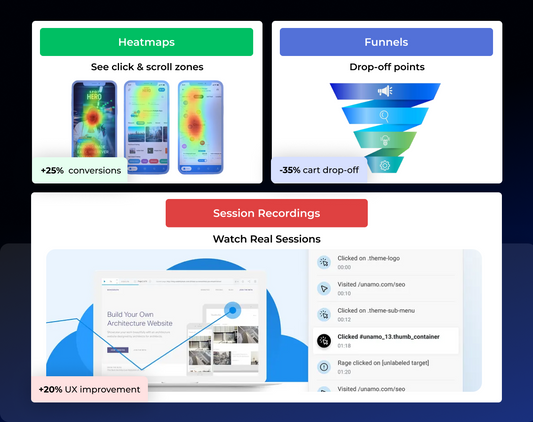
How to Use Heatmaps, Funnels & Session Recordin...
You’ve spent hours perfecting your eCommerce site - stunning product photos, compelling copy, irresistible discounts, and yet… the conversions aren’t coming in like they should. The traffic’s there, but the...
How to Use Heatmaps, Funnels & Session Recordings to Increase Conversion Rates?
You’ve spent hours perfecting your eCommerce site - stunning product photos, compelling copy, irresistible discounts, and yet… the conversions aren’t coming in like they should. The traffic’s there, but the sales? If this sounds familiar, you're not alone. It is important to realize what visitors actually perform on your website, the locations they click, where they pause and if they decide to bounce off instead. Personality isn’t best guessed; it’s best understood by observing how someone behaves. And that's where heatmaps, conversion funnels, and session recordings come in. This blog is your guide into how these tools work, why they matter, and how you can use them strategically to identify friction points, fix what’s broken, and ultimately increase conversion rates. Whether you're trying to optimize your online store for sales or focused on broader ecommerce performance optimization, you’ll find the insights, actions, and best practices you need (minus the fluff, jargon) here. Heatmaps: Visualizing user engagement What are heatmaps? Heatmaps are visual representations that illustrate user interactions on a webpage. These showcase where users click, scroll, and spend time on your website. They use color gradients, typically from blue to red, to indicate the intensity of user activity in different areas. If people choose to click a button or scroll down a page or simply move their mouse across a screen, heatmaps record and show this. They allow you to tell which pages users are checking out and which they neglect, giving you an easy to follow snapshot of how your site is being used. Types of heatmaps Click maps: These track and display where users click most frequently on a page, highlighting CTAs, links, or even non-clickable elements that attract attention. Scroll maps: These show how far down users scroll, helping you determine the optimal content placement before users drop off. Move maps: These follow cursor movement, providing clues to where the user’s attention is focused, even when they don’t click. It's like reading their digital body language. How do heatmaps increase conversion rates? Optimize call-to-Action (CTA) placement: By identifying hot zones with high click rates, you can strategically place CTAs where they’re most likely to convert. Enhance content layout: Identify which sections retain user attention and adjust content placement accordingly. Improve navigation: Heatmaps can detect the areas in navigation where users hesitate or repeatedly click in confusion, so you can refine the path to purchase. Example An eCommerce brand used heatmaps to discover that users were missing a key CTA because it was placed too low on the page. After repositioning it into a higher engagement zone, the brand witnessed a substantial uplift in conversions, demonstrating how data-backed tweaks can drive tangible results. Conversion funnels: Mapping the customer journey What are conversion funnels? A conversion funnel is a step-by-step journey a visitor takes from the moment they land on your site to the point they take a desired action, such as completing a purchase, signing up, or downloading a resource. Each stage of this funnel represents a potential point of friction, and understanding these stages enables you to find out where users lose interest and drop off. By identifying and optimizing these drop-off points, you can significantly improve the overall conversion rate. Stages of an eCommerce funnel Awareness: This is where the user discovers your website, often through search engines, social media, or ads. Interest: They begin exploring your offerings, browsing product categories, reading descriptions, or engaging with content. Desire: Shoppers show intent by adding items to their cart or wishlist. Action: The final stage where the user completes the purchase or other desired action. RELATED: How an Ecommerce Growth Agency Optimizes the Entire Customer Journey? How do eCommerce funnels increase conversion rates? Simplify checkout processes: Reduce the number of steps required to complete a purchase. Letting customers skip login and checkout as guests makes the process simpler, helping to keep cart abandonment down. Offer multiple payment options: Providing flexibility with digital wallets, credit cards, and buy-now-pay-later solutions accommodates a wider range of customers. Implement trust signals: Use trust badges, SSL certificates, customer reviews, and secure payment icons to build credibility, nudging hesitant buyers toward completion. Stat Statistical Insight: A study indicates that simplifying the checkout process alone can decrease cart abandonment by up to 35%, proving that small changes at the final stage of the funnel can yield big rewards. Session recordings: Observing real user behavior What are session recordings? Session recordings capture real-time user interactions on your website, allowing you to watch how users navigate, where they hesitate, and what obstacles they encounter. They record mouse movements, clicks, scrolls, and even hesitations, giving you a replayable video of user behavior. Unlike traditional analytics, which offer numerical data, session recordings give you a qualitative look at how your users interact with your website. Benefits of session recordings Identify usability issues: You can spot confusing navigation, broken elements, or design flaws that might be invisible in regular analytics but are painfully clear when watching real users struggle. Understand user intent: Watching users interact with your site helps clarify what they’re trying to accomplish, whether it's finding a product, comparing features, or seeking support. Enhance user experience: With real-world behavioral data, you can make meaningful improvements to layout, accessibility, and functionality to create a smoother journey. How to increase conversion rates using session recordings? Fix navigation bottlenecks: If users repeatedly misclick or backtrack, it’s a sign your site structure may be unintuitive. Reorganizing menus or adding smart search tools can solve this. Address form abandonment: By observing where users drop off in forms, you can identify pain points like long fields or unclear instructions, and simplify the process. Optimize mobile experience: By replaying sessions, we notice issues with touchscreen targets and other mobile-specific challenges, making it easier to improve the design for mobile users. Expert opinion Experts at WiserNotify emphasize that session recordings are invaluable for uncovering hidden user frustrations, leading to more targeted and effective optimizations. Integrating tools to increase conversion rates Using heatmaps, funnels, and session recording separately offer value, but when used together, they for a complete picture of user behavior, helping optimize online store for sales. Heatmaps reveal where users are most engaged, funnels identify where they drop off, and session recordings explain why. This triad works in synergy to decode both the quantitative and qualitative aspects of the user experience, enabling data-backed decisions for continuous improvement. Strategic implementation Data triangulation: By cross-referencing insights across all three tools, you can validate trends. For example, a funnel may show drop-offs on the cart page, heatmaps could show that CTAs are being ignored, and recordings might reveal that a confusing shipping calculator is to blame. Continuous monitoring: User behavior changes with trends, seasons, and device usage. Ongoing analysis ensures your site stays relevant and effective in driving conversions. A/B testing: Use insights to hypothesize changes, and then test variations. Compare results to determine what resonates best with your audience and fine-tune accordingly. Real-world application An eCommerce brand combined all three tools to diagnose a dip in sales. They found users were getting stuck at checkout due to unclear shipping costs. After updating content and repositioning CTAs based on heatmaps and session insights, they experienced a 20% boost in conversions over three months. Best practices for eCommerce performance optimization Regularly update content: Keep product pages fresh with updated descriptions, new imagery, seasonal messaging, and customer reviews. This not only keeps users engaged but also improves SEO and signals to return visitors that your site is active and trustworthy. Ensure fast load times: Site performance can badly impact user happiness if pages take just one second more to load. Make images smaller, add lazy loading, compress your files and benefit from caching for better performance. Mobile optimization: With more than half of online shopping now happening on mobile devices, your site must be responsive. Prioritize thumb-friendly design, quick load speeds, and intuitive navigation tailored to smaller screens. Personalize user experience: Use data such as browsing behavior, past purchases, and geographic location to deliver tailored content and product recommendations. Personalization enhances user engagement, boosts loyalty, and improves average order value. Final thoughts Using heatmaps, conversion funnels and session recordings gives you everything you need to know about user actions and allows you to improve your conversions. They remove all doubt, showing you how users respond to your site which areas confuse them and what encourages them to convert. They provide a complete look at all aspects of your eCommerce performance when used together. Success is maintained when we don’t stop reviewing our insights, make quick updates and optimize things wisely. Do this consistently, and you won't just increase conversion rates, you'll build a store that truly resonates with your customers and keeps them coming back.
Read More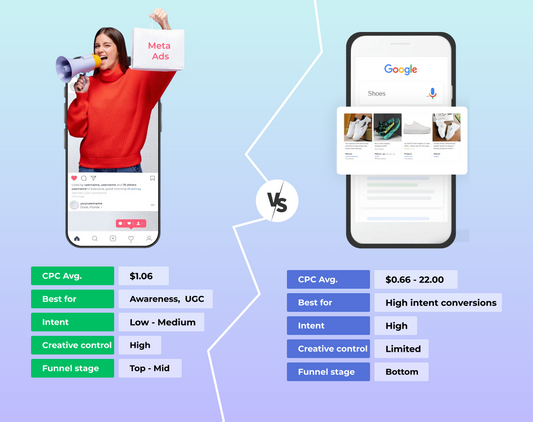
Digital Marketing for Ecommerce: Meta Ads vs. G...
In the bustling and constantly evolving landscape of digital marketing for ecommerce, two platforms have emerged as dominant forces: Meta Ads, encompassing both Facebook/Instagram and Google Shopping. These platforms have...
Digital Marketing for Ecommerce: Meta Ads vs. Google Shopping - Which One’s Worth Your Budget?
In the bustling and constantly evolving landscape of digital marketing for ecommerce, two platforms have emerged as dominant forces: Meta Ads, encompassing both Facebook/Instagram and Google Shopping. These platforms have reshaped how eCommerce brands reach, engage, and convert customers. While both offer immense potential to grow your business, the decision on where to allocate your marketing budget isn't always simple. Choosing between them can often feel like picking between two equally tempting desserts when you're watching your sugar intake - tempting, overwhelming, and a little bit strategic. Meta Ads are all about precision and visual storytelling. With its data-rich targeting capabilities, it allows you to reach the right audience at the right time, even if they weren't actively looking for your product. On the other hand, Google Shopping captures users at the moment of intent. Someone types in "best leather backpack under $100" and there your product is, right where it needs to be. This blog will break down both platforms in detail - costs, targeting, formats, automation, and real-world use cases, so you can decide where your money gets the most bang for the buck. Understanding Meta ads Meta Ads represent Facebook and Instagram advertising. These platforms thrive on capturing attention through interruption marketing. You’re not waiting for someone to search for your product; you’re placing it into their scroll-happy hands. Meta thrives on visual content and can help you build brand loyalty, awareness, and even sales through formats that range from static images to full-blown storytelling reels. Its catalog-based Dynamic Product Ads can also automatically serve personalized content based on what users have browsed on your site. What Google Shopping brings to the table? Google Shopping, by contrast, is more utilitarian but highly powerful. Think of it as a matchmaking service that connects your product listing with someone actively searching for it. It works via a product feed that includes titles, prices, descriptions, and images. These ads show up across the Google Search Network, the Shopping tab, and other Google properties like YouTube and Gmail when Performance Max campaigns are enabled. The goal is simple: make it easy for a high-intent user to discover and buy your product with minimal distraction. Meta Ads vs. Google Shopping Ads: Digital marketing for eCommerce When it comes to digital marketing for eCommerce, Meta Ads and Google Shopping Ads serve distinct yet complementary purposes. Meta Ads excel at building brand awareness and creating emotional connections through visually rich storytelling, even when users aren’t actively shopping. In contrast, Google Shopping Ads target high-intent shoppers right when they’re searching for specific products, making them ideal for driving quick conversions. Understanding how each platform aligns with your business goals can help you allocate your budget more strategically and maximize your ROI. Audience intent: Interest vs. intent Here’s where the two platforms really diverge, and where your goals should start influencing your strategy. Meta Ads focus on who the person is - their age, job title, interests, past interactions, and even their life events. You're targeting people based on their lifestyle, not necessarily what they're shopping for at that exact moment. This is incredibly useful for brands that want to build awareness, showcase lifestyle-driven products, or guide someone down a longer consideration funnel. Meta shines when your brand story matters, or when your product isn't something a user is Googling for but would absolutely love if they stumbled upon it. Google Shopping, on the other hand, targets based on what people are looking for right now. These users have already shown a strong intent by typing specific keywords into Google. All you need to do is be there when they hit enter. This type of advertising is ideal for bottom-of-the-funnel conversions. The targeting is handled largely through keyword relevance and optimized product feeds, rather than psychographics or demographics. Cost & performance metrics When it comes to eCommerce advertising, understanding cost and performance metrics isn’t just helpful - it’s essential. Every click, impression, and conversion needs to be weighed against your ROI. Meta Ads generally offer lower cost-per-click rates, averaging around $1.06. However, the cost per acquisition can fluctuate depending on the quality of your creative and the specificity of your audience. Meta's dynamic creative optimization and lookalike targeting can help lower these costs when used effectively. Google Shopping typically has a higher CPC, ranging from $0.66 to $2.00 depending on the competition within your product category. In highly competitive industries like electronics or fashion, it can spike much higher. However, because users have high purchase intent, the conversions often justify the spend. The average ROAS for Google Shopping can be quite strong, especially when paired with a well-optimized product feed and proper bid strategy. Creative formats & user experience On Meta, creativity is the currency. You're not just selling a product; you're selling a feeling, a lifestyle, an aesthetic. Meta gives you full control over how your brand is presented, from carousel ads showcasing multiple product angles to video ads that tell a mini-story. These formats allow for emotional connections that drive interest and brand affinity, especially with high-quality UGC or influencer content. Google Shopping is less about the story and more about the specs. Your ad is essentially a snapshot of your product pulled from your feed image, title, price, and reviews if available. You don’t control the ad creative per se, which can be a limitation but also reduces the time spent on production. Here, quality product photography and keyword-rich titles do the heavy lifting. AI, automation & future-proofing Both Meta and Google are leaning heavily into automation, and if you're not already testing these tools, you're at risk of falling behind. Meta has launched several AI-driven ad products like Advantage+ Shopping Campaigns, which allow machine learning to take over bidding, targeting, and even creative combinations. The idea is to find what works faster and at scale. Google’s Performance Max campaigns aim to do the same, but across its entire ecosystem - Search, YouTube, Gmail, and Display. With a single campaign setup, you can reach potential buyers at multiple touchpoints. However, it comes at the cost of transparency. You won’t know exactly where your ads are being served, which makes optimization trickier. Matching your goals to the right platform Your eCommerce goals should dictate your platform of choice, not the other way around. If you're in the early stages of brand building, launching a new product, or trying to grow a social following, Meta offers the best tools to craft a compelling story and reach people where they spend their time. If your goal is to scale sales quickly, especially for products people are already searching for, Google Shopping is a better investment. You get direct access to buyers with high intent, which can translate into more predictable sales performance. And if you're looking to retarget users who added items to their cart but didn't check out? Combine both. Use Meta to re-engage them socially and Google to catch them when they're reconsidering with a fresh search. Building a hybrid strategy The most effective eCommerce brands don’t choose between Meta and Google, they use both, strategically. The hybrid approach allows you to guide a customer from discovery to purchase in a seamless, omnichannel experience. For example, you might start with a video ad campaign on Meta to generate awareness and engagement. Then, as interest builds, you retarget that same audience with product-focused ads on Meta and follow up with Google Shopping ads targeting search queries related to your product. This combination can result in a 30-45% increase in conversion rates compared to using one platform alone. Setting budgets & running tests Let’s say you have a monthly budget of $10,000. A balanced approach might allocate 40% to Meta for awareness and engagement, 30% to a mix of Meta and Google for retargeting and mid-funnel activity, and 30% to Google Shopping for high-intent conversions. Testing is key to refining this allocation. Run A/B tests on creatives, rotate audience segments, and compare different campaign types like Performance Max vs. Standard Shopping. Keep an eye on metrics like ROAS, CPA, and CTR to guide adjustments month over month. Your budget should evolve as your data grows. Don’t set it and forget it. Conclusion If your eCommerce store is only using one platform, you're likely missing out on potential revenue. Each platform offers unique strengths that can complement the other when used correctly. Use Meta for storytelling, audience building, and retargeting with visually engaging content. Leverage Google Shopping for reaching high-intent buyers at the moment they're ready to purchase. And wherever possible, combine the two in a hybrid strategy that maximizes every stage of the funnel.Ultimately, the best approach to digital marketing for eCommerce is one rooted in experimentation, analysis, and adaptation. So test, tweak, and let your data lead the way.
Read More
How to Use RFM Segmentation to Build Smarter eC...
In the ever-evolving world of online commerce, it’s no longer enough to simply drive traffic to your site and hope for conversions. Smart eCommerce businesses are focusing on customer-centric strategies...
How to Use RFM Segmentation to Build Smarter eCommerce Growth Strategies?
In the ever-evolving world of online commerce, it’s no longer enough to simply drive traffic to your site and hope for conversions. Smart eCommerce businesses are focusing on customer-centric strategies that deliver real growth. One powerful but often underutilized method in this toolkit is RFM Segmentation. If you're aiming to increase online sales, improve customer retention, and scale with purpose, this guide will walk you through how RFM segmentation can unlock smarter eCommerce growth strategies. Whether you’re an emerging brand or an established store, this is the kind of strategic insight that takes your eCommerce brand building efforts to the next level. What is RFM segmentation? RFM stands for Recency, Frequency, and Monetary value. It's a data-driven model used to analyze and segment your customer base based on their buying behavior. Here's a quick breakdown: Recency (R): How recently a customer made a purchase. Frequency (F): How often they purchase. Monetary (M): How much money they've spent. These metrics are vital in identifying customer loyalty, spending habits, and purchase cadence. For instance, someone who buys every month and spends a large amount is much more valuable to your business than someone who placed one order a year ago. By scoring customers on these dimensions, you can identify opportunities for personalized outreach, loyalty programs, upsells, and even churn prevention. Why RFM segmentation matters in eCommerce growth strategies? In an age where personalization drives purchasing decisions, treating all customers the same just doesn't cut it. Your customers are unique, and your communication should reflect that. RFM segmentation allows you to: Prioritize high-value customers who consistently contribute to your bottom line. Re-engage dormant users with timely, relevant offers. Tailor messaging to fit the specific behaviors and needs of different segments. Allocate marketing budgets to where they generate the highest ROI. This is essential in crafting eCommerce growth strategies that move beyond basic sales tactics and into sustainable, intelligent scaling. When you understand what makes your top customers tick, you can replicate that success across your entire customer base. How to implement RFM segmentation? Src: https://www.linkedin.com/pulse/customer-segmentation-using-rfm-prasad-nehe/ Let’s break it down step by step: 1. Collect the right data To start, you need historical data on your customers' purchase behavior. At a minimum: Customer ID or email Date of last purchase Total number of purchases Total revenue generated by the customer This data helps you track individual behavior over time. Most eCommerce platforms like Shopify, WooCommerce, or Magento can export this data. Alternatively, use analytics tools or a CRM platform to enhance the depth and accuracy of your data. Ensuring your data is regularly updated and normalized will lay a strong foundation for effective segmentation.core customers on each RFM metric 2. Score customers on each RFM metric Once you’ve gathered the data, assign each customer a score for Recency, Frequency, and Monetary value. Typically, this is done on a scale of 1 to 5, where 5 is the most favorable score. For example: A recent buyer (e.g., purchased within the last week) gets a Recency score of 5. A frequent buyer (e.g., made 10+ purchases) gets a Frequency score of 5. A big spender gets a Monetary score of 5. Use business-specific criteria or statistical methods like quintiles to assign these scores. The goal is to rank customers so you can understand who needs attention and who’s already driving value. 3. Create RFM segments Once you’ve scored each metric, combine them into a three-digit score (e.g., 555, 441, 213). Then, group customers based on these codes into meaningful segments. Here are some sample segments: Champions (555): Recent, frequent, and high-spending customers. Loyal Customers (x5x): Frequent buyers, even if their spend isn’t the highest. Big Spenders (xx5): High spenders regardless of recency/frequency. At Risk (1xx): Previously active, haven’t purchased recently. Need Attention (2xx): Low recency and frequency, indicating minimal engagement. These segments serve as the blueprint for your eCommerce growth strategies and help you tailor actions for maximum impact. Strategic actions for each segment The true value of RFM segmentation is unlocked when you use it to tailor your strategies. Here’s how different segments fit into your eCommerce growth strategies: 1. Champions (555) These are your MVPs - customers who buy often, spend big, and stay engaged. You should focus on delighting and retaining them. Strategy: Retain and reward them. Exclusive early access to new products or new launches Loyalty programs and VIP tiers Personalized thank-you messages Surprise rewards or free gifts Involve them in product testing or beta groups Ask for testimonials or reviews that can boost credibility By nurturing these customers, you’re not just preserving revenue, you’re cultivating brand ambassadors who can influence others and strengthen your eCommerce brand building efforts. 2. Loyal customers (x5x) They shop often, but might not spend much per order. Here’s how you can maximize their value: Strategy: Increase their AOV (average order value). Recommend bundles or complementary products. Offer loyalty points or tiered rewards to encourage larger purchases. Use personalized upsell/cross-sell emails based on browsing or purchase history. Offer time-limited discounts on higher-value items. These customers have already shown consistent interest. Therefore, small nudges can significantly improve profitability. 3. Big spenders (xx5) These customers might not shop frequently, but when they do, they go big. They need to feel valued. Strategy: Build brand affinity. Offer a premium loyalty experience with perks, surprise gifts, and recognition. Send hand-written notes or premium packaging to enhance the unboxing experience. Feature them in social media spotlights (with permission). Solicit feedback to make them feel invested in your brand. This builds emotional loyalty, turning them from occasional splurgers into brand devotees. 4. At-risk customers (1xx) They were once engaged but haven’t purchased in a while. Your goal here is reactivation. Strategy: Win them back. Send personalized win-back emails with irresistible offers. Use email subject lines that spark curiosity or urgency. Remind them of previously browsed or purchased items. (e.g., "We miss you" discounts) Offer a discount on a product they previously showed interest in. Surveys to understand why they’ve dropped off. Reviving just a small percentage of this group can significantly increase online sales with minimal acquisition costs. 5. New customers (5xx) First impressions matter. New customers need to feel welcomed and supported. Strategy: Onboard and nurture. Launch a welcome email sequence that educates and reassures. Highlight your bestsellers or how-to guides. Offer a first-purchase discount for the next order. Encourage social follows and product reviews. This helps in building the early stages of loyalty and trust - cornerstones of long-term eCommerce brand building. Tools for RFM segmentation RFM can be managed manually in Excel, but automation makes it scalable. Here are some powerful tools to help: Shopify apps: Reveal by Omniconvert, Segments by Tresl Email marketing platforms: Klaviyo and Drip have robust segmentation features, and offer built-in RFM logic. CRMs & BI tools: HubSpot, Glew.io, and Google Data Studio can provide layered insights. When choosing, consider your platform compatibility, ease of use, and integration with your current marketing stack. How RFM segmentation helps increase online sales? Here’s where the impact becomes measurable. RFM segmentation helps your business: Craft laser-focused campaigns to target the right message to the right customer. Decrease cart abandonment with tailored follow-ups. Reduce CAC (Customer Acquisition Cost) by focusing on high-LTV customers. Boost LTV by nurturing loyal buyers. Let’s say a high-value customer hasn't purchased in a while. Instead of a general promo, you send a highly personalized email with a product they’ve bought before, plus a loyalty bonus. This kind of thoughtful communication doesn’t just bring them back, it reminds them why they loved your brand to begin with. For example, you might: Send an exclusive offer to a Champion with a 3-day expiry. Email a "We miss you" reminder to an At-Risk customer with a 15% discount. With RFM, each interaction is designed to increase online sales through relevance and timing. RFM and eCommerce brand building Your brand is more than your product. It’s how people feel when they interact with you. RFM segmentation ensures your communications feel personal and timely. Personalization: Customers who feel understood are more likely to return. Trust: Consistent relevance reduces unsubscribes and increases email open rates. Community: Positive experiences drive word-of-mouth and UGC (user-generated content). Smart segmentation = smart messaging = strong brand. RFM segmentation helps your messaging resonate on a personal level. That’s how you convert one-time buyers into loyal advocates. This connection is crucial for lasting eCommerce brand building. Mistakes to Avoid with RFM Segmentation 1. Using only RFM without context While powerful, RFM doesn’t factor in qualitative data like product preferences or customer sentiment like customer reviews or feedback. Therefore, it is best to blend it with other analytics. 2. Failing to update regularly Your customer base isn’t static. Customer behavior evolves. Therefore, refresh your segments monthly or quarterly to stay relevant. 3. Over-segmentation Too many micro-segments can overwhelm your team and dilute efforts. Start with 4-6 broad segments, then branch out. 4. Lack of actionable campaigns Scoring customers is useless if you’re not using the data. Every segment should have a clear, mapped-out strategy. RFM segmentation in action: Real-life examples Example 1: Fashion eCommerce brand ASOS previously trialed a loyalty program called A-List, which allowed customers to earn points for purchases that could be converted into vouchers. However, the company eventually phased out A-List to concentrate on expanding the Premier Delivery service globally, recognizing its greater appeal and impact on customer loyalty. Example 2: Beauty subscription box Birchbox, a pioneer in beauty subscription services, observed customer churn spikes after three months of subscription. By segmenting "At-Risk" customers using RFM analysis, Birchbox implemented personalized check-in surveys and customized offers to re-engage these users. This strategy aimed to reduce churn and enhance customer retention. Example 3: Clothing brand A real-world example of a brand that effectively utilized RFM (Recency, Frequency, Monetary) segmentation to enhance customer retention is Pajar Canada, a premium winter wear company. By analyzing their RFM data, Pajar discovered that a significant portion of their revenue was generated by a small group of high-value customers, particularly during seasonal peaks. Recognizing this, they implemented targeted strategies such as personalized marketing campaigns and loyalty programs aimed at these "Big Spenders." These initiatives led to improved customer engagement and a notable increase in repeat purchases Final thoughts: Smart growth is segmented growth RFM segmentation isn’t just about analytics; it’s about unlocking eCommerce growth strategies that are rooted in customer behavior. It empowers you to: Increase online sales without increasing ad spend Build deeper, lasting customer relationships Improve ROI across your marketing channels If you want to thrive in today’s hyper-competitive digital landscape, your growth strategies must be as dynamic as your customers. The future of eCommerce lies in personalization, not guesswork. RFM helps you turn insights into actions, and actions into growth. Start segmenting your audience, start personalizing, and start scaling smartly. Ready to implement RFM segmentation in your store? Start by identifying your Champions. They’re the key to building momentum, loyalty, and meaningful brand advocacy. After all, the future of eCommerce isn’t mass marketing. It’s mass personalization. And RFM is your shortcut to getting there.
Read More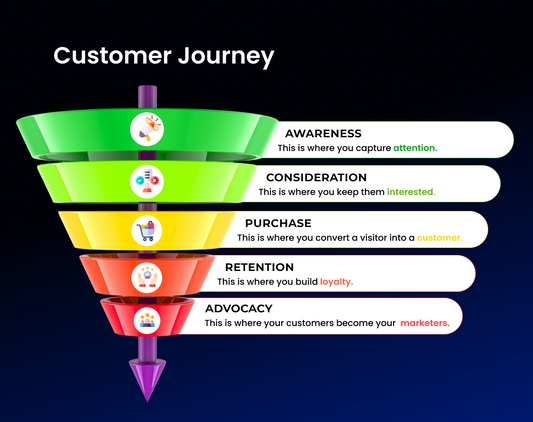
How an Ecommerce Growth Agency Optimizes the En...
Have you ever wondered why your ads are getting clicks but conversions are crawling? Or why first-time buyers never come back, even when you offer discounts? Welcome to the leaky...
How an Ecommerce Growth Agency Optimizes the Entire Customer Journey?
Have you ever wondered why your ads are getting clicks but conversions are crawling? Or why first-time buyers never come back, even when you offer discounts? Welcome to the leaky funnel club. The truth is, many eCommerce brands obsess over the top of the funnel and forget that real growth lives in the entire customer journey. That’s where an eCommerce growth agency comes in, not just to sell more, but to sell smarter. This blog unpacks how a growth-focused agency dives deep into every touchpoint of the customer experience, fixing the cracks, plugging revenue leaks, and setting up scalable systems for acquisition, retention, and advocacy. And we're not talking vague strategies here. We're going full-on, brass-tacks, value-packed breakdown mode—with stats, tools, and real-world applications you can swipe for your own brand. Understanding the eCommerce customer journey Before we optimize, we diagnose. The customer journey isn't linear anymore. It's a messy web of touchpoints. But for the sake of structure, most eCommerce growth agencies map it across five core stages: 1. Awareness 2. Consideration 3. Purchase 4. Retention 5. Advocacy At each of these stages, there are potential friction points like long load times, confusing navigation, impersonal messaging, lack of trust signals, etc. According to Salesforce, 80% of customers say the experience a company provides is as important as its products and services. That’s not just fluff. The journey matters. 5 Stages of customer journey according to an eCommerce growth agency When a growth agency looks at your customer journey, it’s not just ticking boxes, it’s reading between the lines of every click, bounce, and "meh" moment. These five stages aren’t just marketing jargon; they’re real opportunities to connect, convert, and keep customers coming back. From grabbing attention in the wild scroll-zone to turning buyers into die-hard fans, each step tells a story. And a smart agency? They know exactly where that story’s falling flat, and how to rewrite it for growth. Let’s dive into each stage and see what really moves the needle. Awareness: Building the right kind of traffic Let’s start at the top. Most eCommerce brands pour their energy (and budgets) into this stage, and hey, no shame in that. Awareness is where the spark happens. But here’s the catch, more traffic doesn’t always mean more sales. A smart eCommerce growth agency doesn’t just throw ad dollars at Facebook and hope for the best. They dig into who your ideal customers are, where they hang out, and what actually grabs their attention. It’s not about shouting louder; it’s about showing up smarter with the kind of message and creative that stops the scroll and makes the right people click. What they do instead: Conduct customer persona research to find where your actual audience hangs out. Use a mix of top-of-funnel paid media (Meta, TikTok, YouTube) + organic (SEO, influencer UGC, social) to generate interest. Craft storytelling-led creatives that build emotional resonance, not just clicks. Stat check: Brands using video content as part of their awareness campaigns see 66% more qualified leads per year. Key tools used: Meta Ads Manager, Google Ads, SparkToro, Semrush, Influencity Consideration: Nurturing without nagging Here’s where things start to get slippery. Someone clicks, browses, maybe even adds to cart... and then they vanish. This is the stage where interest either builds or breaks. A good eCommerce growth agency doesn’t chase after every bounce with desperate emails and creepy retargeting ads. Instead, they craft a thoughtful strategy that keeps your brand top of mind, whether that’s through value-packed emails, engaging content, or social proof that makes people think, “Okay, this brand gets me.” It’s about guiding, not grabbing, nurturing the relationship without feeling like that clingy ex. Tactics that work: Dynamic product recommendation carousels based on visitor behavior High-converting landing pages with social proof (reviews, UGC, media mentions) Email/SMS flows triggered by key behaviors (browse abandonment, product interest) Stat check: Adding customer reviews to product pages can increase conversion rates by 270% (Spiegel Research Center). Key tools used: Klaviyo, Attentive, Privy, Rebuy, Hotjar Purchase: Making the checkout simple So your customer’s ready to buy - great! But this is where a surprising number of brands trip over their own shoelaces. Long forms, hidden fees, slow-loading pages... it’s like asking someone on a date and then forgetting your wallet. An eCommerce growth agency zooms in on this moment like a hawk, using data to spot every point of friction, and then ruthlessly eliminating it. They streamline the checkout flow, optimize for mobile, and make sure trust signals are present. Because when someone’s ready to give you their money, the last thing you want is to make it hard for them. Key optimizations: A/B testing elements like CTA buttons, page load speed, and pricing display Trust signals (secure checkout badges, easy return policies) Simplified checkout flows (Shop Pay, 1-click upsells, progress indicators) Stat check: The average cart abandonment rate is nearly 70% (Baymard Institute). Optimizing the checkout experience can recover 35% of that revenue. Key tools used: Shopify Plus, Zipify, Convert, Google Optimize, Fera Retention: Keeping customers coming back This right here is where the gold is. Everyone loves a flashy new customer, but keeping the ones you already have? That’s where the real profit lies. In fact, it costs 5x more to acquire a new customer than to retain an existing one. According to Bain & Company, just a 5% boost in retention can drive up profits by a whopping 95%. Wild, right? A growth agency knows this isn’t just about sending discount codes and crossing fingers. It’s about creating memorable post-purchase experiences, building loyalty programs that actually feel rewarding, and keeping communication personal and timely. Because when people feel valued, they stick around, and spend more. Retention playbook: Post-purchase email flows with personalized product recommendations Loyalty programs that actually reward value (not just points-for-cash) Proactive customer service (chatbots + human follow-up) Key tools used: Gorgias, Yotpo, Smile.io, Postscript, Loop Returns Advocacy: Turning buyers into evangelists You know what’s even better than a repeat customer? One who won’t stop talking about you, in the best way possible. Advocacy is the secret weapon most brands overlook. When people love your product and experience, they naturally want to share it. An eCommerce growth agency helps you harness that energy by building smart systems that make referrals, reviews, and user-generated content (UGC) feel effortless and rewarding. Whether it’s a seamless referral program or an Instagram-worthy unboxing moment, this stage turns happy customers into your most powerful (and free!) marketing machine. How they do it: Automated referral programs with easy-to-use sharing features Incentivized review campaigns and video testimonial requests Community-building via email/SMS or platforms like Geneva or Discord Stat check: Referred customers have a 37% higher retention rate and spend 200% more than non-referred ones (HubSpot). Key tools used: ReferralCandy, Okendo, VideoAsk, Bazaarvoice Metrics That Matter (And the Ones That Don’t) Not every metric deserves your attention, and trust us, not all numbers are created equal. Sure, vanity metrics like impressions, likes, and follower counts can feel good in the moment, but they don’t always translate into real growth. A good eCommerce growth agency helps clients move past these surface-level stats and hone in on the metrics that actually drive business. We're talking actionable KPIs like: CAC vs. LTV Email/SMS ROI Funnel drop-off rates Subscription retention (if applicable) Net Promoter Score (NPS) These are the numbers that tell you whether your marketing efforts are really moving the needle or just adding noise. By focusing on what truly matters, you can make smarter decisions that push your brand toward sustainable success. Conclusion: Growth Is a Journey, Not a Hack There’s no silver bullet in eCommerce. But there is a smarter, systemized way to grow. An eCommerce growth agency works across your entire customer journey, turning fragmented tactics into a cohesive, conversion-generating machine. So if you’re tired of chasing ROAS while your backend bleeds customers, it might be time to stop hacking and start building. After all, growth isn’t just about getting bigger. It’s about getting better at every step. Need help mapping your customer journey? Let’s talk. We’ll show you how a real eCommerce growth agency gets it done. No fluff, just frameworks that work!
Read More
Psychology of Colors in eCommerce Branding
"Color is a power which directly influences the soul." - Wassily Kandinsky, a famous Russian painter, and art theorist. Do you agree? We do. Colors have always appealed greatly to...
Psychology of Colors in eCommerce Branding
"Color is a power which directly influences the soul." - Wassily Kandinsky, a famous Russian painter, and art theorist. Do you agree? We do. Colors have always appealed greatly to our visual senses. These are frequently used as a marketing tool. Brand color psychology is an exciting topic in eCommerce branding. It's fascinating how different colors stimulate the brain in ways that promote tranquility or excitement. The colors you use in your Shopify store design can significantly impact your target audience. This is because colors play a vital role in how people perceive brands. In this blog, you'll learn about the psychology of colors, its paramount importance in marketing, and some valuable tips to skyrocket your profits using the same. But before diving into the psychology part, let's brush up on our knowledge of colors. Types of colors in eCommerce branding There are three major types of colors, as mentioned below: Primary There are three primary colors in the color wheel - Red, Blue, and Yellow. Secondary Two primary colors, when mixed, make a secondary color. For example, Orange (Red+Yellow), Green (Blue+Yellow), and Violet (Red+Blue) are examples of secondary colors. Tertiary These are formed by mixing one primary and one secondary color: Red-Orange, Yellow-Orange, Yellow-Green, Blue-Green, Blue-Violet, and Red-Violet. The Color Theory vividly describes this through a color wheel that illustrates various colors and their potential combinations. However, some color wheels show more intermediate than in the image below. While warm colors may spark various emotions, including comfort, warmth, hostility, or anger, cool colors may spark tranquility or sadness. Let's study them in detail now. Color psychology We humans are wired to notice patterns, whether it’s in behavior, visuals, or even colors. That brings us to a curious question: Does the color of a product really influence our decision to buy it? Or better yet, does the color of the packaging push us to pick one brand over the other? Short answer: Absolutely, yes! But here’s where it gets interesting (and a bit tricky): Why? Why do we gravitate toward that soft pastel bottle over the loud neon one? Why does black packaging scream “luxury,” while green feels “natural”? The answer lies in a fascinating area of study called color psychology. What is it? Color psychology digs into how different shades and hues affect human emotions and behavior, often without us even realizing it. It explains why we associate blue with trust, red with urgency or excitement, green with health and nature, and black with sophistication or luxury. These color cues sneakily influence how we perceive a brand, what we feel about a product, and even whether we’ll put it in our shopping cart (virtual or not). For example, a vibrant yellow lotion bottle might feel fun and energetic, perfect for a summer skincare line. On the other hand, a sleek, minimalist white packaging, suddenly feels clinical, pure, maybe even high-end. Same product inside, totally different vibe outside. That’s the power of color. Brands use this psychological trickery intentionally. They know that our brains are constantly making snap judgments based on visual signals, and color plays a starring role in that. Whether it’s to communicate safety, luxury, fun, eco-friendliness, or innovation - color helps brands speak to us before we’ve read a single word. So the next time you're drawn to a product at first glance, ask yourself - is it really love at first sight, or is that clever packaging color just doing its job really well? Spoiler alert: it's probably both. How do colors influence people? Colors influence people by tapping into their emotions, memories, and subconscious associations. For instance, warm colors like red and orange can create a sense of urgency or excitement, while cool tones like blue and green evoke calmness, trust, or freshness. Without saying a word, colors silently shape our mood, perceptions, and even the choices we make, especially when it comes to products and brands. Red color psychology Red color tends to increase the appetite. Hence, it is often used by food chains for eCommerce branding. It creates a sense of urgency, which is why it is frequently used for clearance sales. It is high in energy and immediately pulls focus. It stimulates the human body, affecting heart rate, blood pressure, and nerve impulses. Famous brands that use red color: YouTube, Coca-Cola, Puma Blue color psychology The blue color promotes a sense of trust and security in the brands. Unlike red, it curbs appetite and offers feelings of calmness and a sense of tranquility and space. It is most commonly used in offices and conservative corporate brands. Young people, however, associate this color with maturity. Famous brands that use blue color: Facebook, Oral B, PayPal, Intel Green color psychology The green color is associated with nature and money. It is often used for promoting environmental issues. It stimulates harmony in the brain, and thus, many Shopify store designs use green to relax customers. Famous brands that use green color: John Deere, Starbucks, Spotify, Lacoste Purple color psychology The purple color resonates with royalty, luxury, wisdom, respect, and spirituality. However, using it excessively may come across as arrogant. It represents the brands as creative, imaginative, and wise. Purple color is often used for beauty and anti-aging products. Famous brands that use purple color: Cipla, Yahoo, Cadbury Orange & yellow color psychology These colors increase cheerfulness and optimism. These are great color choices to draw in impulsive buyers and window shoppers. These stimulate the logic center of the brain and promote enthusiasm. Famous brands that use these colors: Fanta, Ferrari, McDonald’s Perhaps now you have a clearer view of how the psychology of color works. There's another short list of colors with their associated meanings below. However, the purpose of the colors may vary for individuals depending on upbringing, location, gender, culture, values, and a variety of other factors. Black: Sophistication, prestige, power Blue: Calmness, productivity, trust Green: Relaxation, positivity, trust Orange: Warmth, enthusiasm, ambition Pink: Kindness, warmth, love Purple: Wealth, royalty, status Red: Love, danger, passion, energy Yellow: Happiness, youthfulness, cheerfulness Brown: Earth, nature, simplicity White: Peace, purity, clarity Some psychological tips on using colors for your brand/shopify store design The best way to capture the audience's attention is to use contrast. Use warm colors to attract more buyers. Use red color in CTA buttons on your website. If you want your target audience to like your product, try using cool colors like blue or bright colors like white and grey. Choose a color scheme that creates a contrast between the product and the background. Adjust vibrancy to achieve different effects. Triadic colors are the best for highlighting your products. Blue is a universal color preferred both by males and females. Bright color schemes are a better idea. Importance of color psychology Color isn’t just about aesthetics. It’s a powerful communication tool that plays a crucial role in eCommerce branding. The colors you choose represent your brand’s values and essence, subtly conveying who you are and what you stand for to your target audience. A well-thought-out color scheme can express your brand's personality, whether it’s bold and energetic, calm and trustworthy, or natural and sustainable. When chosen thoughtfully, colors help your brand connect emotionally with consumers, making it more memorable and appealing. They also create visual consistency, which builds recognition over time. For example, when someone mentions a clown dressed in red and yellow, what pops into your head almost instantly? McDonald’s! That’s the power of strategic color use in eCommerce branding. It sticks. It speaks. It sells. In a crowded market, your color palette can be the silent ambassador that sets you apart, so choose wisely! The bottom line Ultimately, various brands have to apply the psychology of color in eCommerce branding and marketing themselves to attract customers. This is because different colors affect human emotions in different ways. However, there are a few tips that do the work. Words can't stress enough the importance of color psychology in marketing. And so, it's time that you start exploring various color schemes and fine-tune them per your audience's needs. For this, you may need to hire a professional agency that offers Shopify store design services. Contact us at Nivara Commerce if you want to build an eCommerce brand.
Read More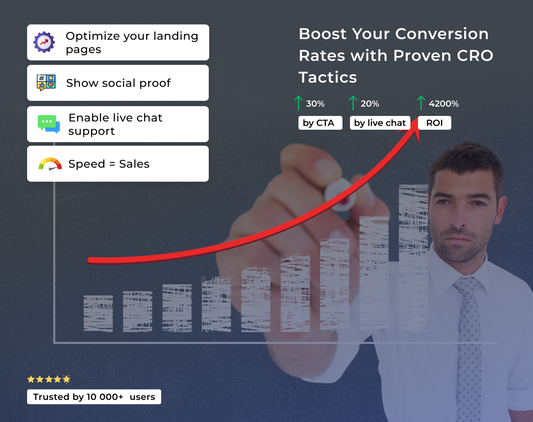
How to Increase Conversion Rates by 25% in 1 Day?
You’re setting up advertisements, optimizing your SEO, posting on social media, and maybe even working with influencers. Traffic is coming in. People are clicking. But no sales, no sign-ups -...
How to Increase Conversion Rates by 25% in 1 Day?
You’re setting up advertisements, optimizing your SEO, posting on social media, and maybe even working with influencers. Traffic is coming in. People are clicking. But no sales, no sign-ups - just window shoppers! Annoying, isn’t it? You're paying for those visitors, and they are not converting. Don't worry, you're not alone. The average conversion rate across industries is just 2.35%, which means out of every 100 people who visit your site, only 2 or 3 will take action. However, there are businesses who have seen their conversion rates explode in just a short period. How? By optimizing their conversion strategies! So, if you’re ready to turn your traffic into revenue, keep reading. Why do conversion rates matter? One of the most crucial metrics to monitor in order to guarantee the success of your marketing initiatives and prevent budget waste is conversion rates. You launch a marketing campaign to encourage consumers to do something like buy your goods, fill out a lead generation form, give you their email, join up for your services, or follow through on another call to action. You market with the expectation that consumers will follow your instructions and ultimately generate profit for your business. How will you be able to tell whether your plan is effective? Conversion rates! Many people will take action and convert as a result of a successful campaign. An ineffective campaign won't. You'll know it's time to review your marketing strategy if your conversion rate is extremely low. Likewise, you'll know more about what's working if your conversion rate falls between average and high. Unfortunately, you will waste time and money on the incorrect campaigns if you believe that measuring your conversion rates to identify strategies to enhance them is too much work. It will be difficult, if not impossible, to improve the effectiveness of your marketing activities if you never take the time to observe what drives people to convert and where they bounce. Therefore, your conversion rate is important. Strategies to increase conversion rates 1. Optimize your landing pages Remove distractions First impressions matter! Your landing page is what people see when they first visit your site. A cluttered, poorly-designed page will drive people away. However, you can increase conversions by reducing distractions. Remove unnecessary links and exit points. Keep the design clean and minimalistic. Use one clear Call-to-Action (CTA) that directs users towards conversion. Use clear, concise CTA Your CTA should be the loudest voice in the room. Research from Unbounce reveals that changing the CTA text from "Submit" to something action-oriented like "Get My Free Trial" can increase conversion rates by 30%. Use power words like "Instant," "Now," "Limited," and "Exclusive." Place your CTA above the fold and repeat it throughout the page. Test different button colors (red and orange often perform best). Add testimonials Consumers are 92% more likely to trust a recommendation from another person over direct brand messaging. Show customer reviews and testimonials. Add security badges (SSL, money-back guarantee, secure checkout). Display trust signals like “Over 10,000 Happy Customers. 2. Simplify the checkout process Minimize the no. of steps An estimated 69.99% of online shopping carts are abandoned due to complex checkout processes. Simplifying this step can significantly increase conversion rates. Enable guest checkout (forcing users to create accounts reduces conversions by 35%). Use autofill for forms to save time. Show progress indicators to reassure users. Provide multiple payment options Modern shoppers want options and flexibility. 17% of cart abandonments occur due to a lack of preferred payment methods. Accept credit cards, PayPal, Apple Pay, and Buy Now Pay Later (BNPL) options. Display payment icons clearly for trust-building. Enable live chat support Customers want instant answers. Businesses that offer live chat support see an average increase in conversions of 20%. Use AI chatbots for common queries. Offer live agent support during peak shopping hours. 3. Create sense of urgency Add countdown timers A ticking clock creates urgency. Conversion rates increase by 9% when limited-time offers are used effectively. Highlight “Only X hours left!” to create FOMO. Use time-sensitive discounts to push immediate action. Use ‘Low Stock’ alerts to create FOMO Scarcity works. Showing "Only 3 Left in Stock" increases purchases by 18%. Show dynamic stock alerts on product pages. Use “X people are viewing this right now” notifications. Display social proof popups Tools like FOMO and Proof generate pop-ups showing recent purchases, making visitors feel they are missing out. "John from NYC just bought this!" "Only 5 left in stock - order now!" 4. Use personalization & dynamic content Offer personalized recommendations Personalized experiences drive 80% higher conversions. If a visitor has browsed a product before, remind them. Use AI-driven product recommendations. Show “Frequently Bought Together” bundles. Use exit-intent popups Exit pop-ups can recover up to 10-15% of abandoned visitors. Offer a last-minute discount before they leave. Provide a free resource in exchange for an email sign-up. 5. Optimize your site for speed & mobile Reduce page load times A 1-second delay in page load can reduce conversions by 7%. Speed matters. Compress images and enable browser caching. Minimize HTTP requests and enable lazy loading. Ensure responsivenes Mobile commerce accounts for 73% of all eCommerce sales, yet most websites still aren’t fully optimized for mobile. Use mobile-responsive design. Test checkout and product pages on different devices. 6. Run an exclusive offer Use email & SMS marketing Email marketing has an ROI of 4200%, meaning for every $1 spent, you can generate $42. Send a “24-hour exclusive offer” email. Use SMS to alert customers about limited-time sales. Run social media ads A well-targeted Facebook or Instagram ad can increase conversion rates dramatically. Use retargeting ads for past visitors. Promote urgency-driven offers to new audiences. 7. Leverage retargeting ads Target abandoned cart & past visitors Retargeting ads bring back 26% of abandoned carts and convert them into sales. Show dynamic ads with products users viewed. Use “Complete Your Purchase & Get 10% Off” messaging. Offer exclusive discounts to returning visitors Entice them to come back with special deals tailored just for their second (or third!) visit. Give first-time buyers a discount on their next purchase. Show a VIP discount to repeat visitors. FAQ What is the top change I can do to increase conversion rates? Shortening your forms, conducting SEO audits, incorporating social proof into your websites, turning on a live chat feature, and other tactics are some of the greatest ways to boost your conversion rate. What is a good freemium conversion rate? Depending on your niche and the kind of product you provide, freemium conversion rates can vary. Average conversion rates fall between 2-5%. Big players like Slack and Spotify, however, have conversion rates higher than 25%. Do conversion rates really matter in 2025? Conversion rates are essential for determining how successful your marketing effort is. Since they provide instant feedback on what is and is not working, it is crucial to monitor and improve your conversion rates in 2025. How to calculate your website’s conversion rate? Simply divide the number of views a page receives by the number of individuals who complete the action you want them to take on that page to determine your website conversion rate. For any online store, the average conversion rate is a crucial performance metric. Conclusion Increasing conversion rates by 25% in one day is 100% possible - if you take action. The strategies we covered today are backed by real data and designed for immediate impact. Optimize your landing pages and checkout process. Use urgency tactics, social proof, and personalization. Speed up your website and enhance mobile experience. Leverage retargeting ads and run exclusive flash sales. Now, imagine what you could achieve with expert CRO services. We specialize in turning traffic into revenue using these proven methods. Book a FREE call today, and let's rev up your success!
Read More
Optimize Your Shopify Store Without Touching Code
In the dynamic world of eCommerce, it is a necessity to optimize your Shopify store. A well-optimized store is crucial for enhancing user experience, improving search rankings, and ultimately, boosting...
Optimize Your Shopify Store Without Touching Code
In the dynamic world of eCommerce, it is a necessity to optimize your Shopify store. A well-optimized store is crucial for enhancing user experience, improving search rankings, and ultimately, boosting conversions. But what if you’re not a developer? What if lines of code look more like cryptograms to you than helpful tools? Don’t worry, you’re not alone, and more importantly, you’re not out of options. In this comprehensive guide, we’ll take you through actionable, proven tactics you can implement right away - no coding required. Backed by data, best practices, and practical tools, this isn’t just another blog filled with surface-level advice. Whether you’re just getting started or looking to squeeze every last drop of performance out of your existing setup, this guide will give you the clarity and confidence to level up your Shopify store on your own terms. 10 No-code strategies to optmize your Shopify store Many of the most impactful enhancements you can make to your Shopify store require zero coding skills. Shopify’s ecosystem is built to be user-friendly, empowering business owners and marketers to take control of their storefronts without needing to hire a developer every time a change is needed. From improving your site’s speed and mobile responsiveness to boosting SEO and enhancing user experience, there are many powerful no-code strategies waiting to be explored. 1. Enhance site speed for a better user experience. Why It Matters: A slow-loading website can deter potential customers. Studies show that a 1-second delay in page load time can lead to a 7% reduction in conversions. Shopify's infrastructure is designed for speed, but your individual store's performance still depends on the theme, apps, and content you use. If your store is slow, users will bounce before they even see your products. The good news? You can supercharge your site speed without touching a single line of code. No-code strategies: Choose a lightweight theme: Opt for themes like Dawn or Turbo known for their speed optimization. These are designed to load quickly and reduce unnecessary scripts. Compress images: Use apps like TinyIMG or Crush.pics to compress images. Oversized images are a common speed culprit, and compression tools help maintain quality while minimizing file size. Limit app usage: Review your apps periodically and uninstall the ones you don’t use. Each app adds to the code load, affecting your speed. Leverage Shopify's built-in features: Shopify uses a global Content Delivery Network (CDN), but you can enhance this by ensuring your images, videos, and other assets are optimized from the start. 2. Optimize for mobile users. Source: Dynamic Yield Why it matters: Over 70% of eCommerce traffic comes from mobile devices. If you want to grow your Shopify store, it must be mobile-friendly, or you'll potentially be losing a massive chunk of your audience. Shopify themes are designed to be responsive by default, but sometimes your customizations, image sizes, or layout choices may interfere. A mobile-optimized store isn't just about fitting on a smaller screen, it's about delivering a smooth, fast, and delightful user experience. No-code strategies: Responsive themes: Confirm your theme is fully mobile-optimized. Stick to Shopify themes labeled “mobile-first” or “mobile-optimized.” These are tested for responsiveness and fast loading across all screen sizes. Preview your site on various devices using Shopify's admin tools. Preview and edit mobile layouts: Shopify’s theme editor lets you toggle between desktop and mobile previews. Use it to adjust spacing, image sizes, and text alignment specifically for mobile. Avoid heavy popups on mobile: Large popups can ruin the mobile experience. Instead, use slide-ins or mobile-specific banners from apps like Privy. Check mobile speed with Google’s tools: Use PageSpeed Insights or Lighthouse to diagnose mobile-specific issues, and implement changes using apps or Shopify settings. 3. Improve search engine optimization (SEO). Why it matters: Search engine visibility is one of the most cost-effective ways to drive consistent traffic. It helps you rank higher on Google, increasing visibility without spending a dime on ads. But SEO can seem intimidating if you’re not tech-savvy. Luckily, Shopify offers basic SEO features, and there are tools that simplify the rest. You don’t need to dive into schema markup or robots.txt to start ranking better. All you have to do is optimize your content, images, and structure to make your store easier to find and more engaging to browse. No-code strategies: Edit meta tags: Use Shopify’s built-in editor to add compelling meta titles and descriptions for every product and collection. SEO apps: Apps like Plug in SEO and Smart SEO help you identify SEO gaps and automate fixes. Alt text for images: When uploading images, add short descriptions in the Alt Text field. This helps search engines understand your content better and improves both SEO and accessibility. Internal linking: Link related products or blog posts to each other to guide users and improve SEO performance. Create SEO-friendly URLs: Shopify allows you to edit URLs. Shorten them and include relevant keywords, e.g., /collections/organic-face-serums instead of /collections/12345. 4. Enhance user experience (UX) and conversion rates. Why it matters: Good UX builds trust and encourages sales. A cluttered, confusing, or overwhelming experience can lead to lost opportunities. Think of UX as the journey your customer takes, from the moment they land on your store to the second they make a purchase. Make that journey seamless, enjoyable, and efficient. No-code strategies: Trust badges: Use apps like Ultimate Trust Badges to showcase secure payment methods, guarantees, and return policies. Live chat support: Implement real-time chat with apps like Tidio to answer questions and reduce bounce rates. Exit-intent popups: Grab the attention of abandoning visitors with discount offers or newsletter signups using Privy. Customer reviews: 93% of online buyers say reviews impact their purchasing decision. If you’re not showcasing happy customers, you’re leaving money on the table. Apps like Loox, Yotpo, and Rich Snippets for SEO help display reviews and UGC (without touching your theme code), adding credibility and social proof. 5. Streamline the checkout process. Why it matters: The fewer the clicks, the more likely customers are to convert. A complicated checkout process is one of the biggest causes of cart abandonment. You can’t control every part of Shopify’s checkout unless you’re on Plus, but even without coding, there are ways to reduce friction. No-code strategies: Simplify checkout: Reduce the number of form fields required at checkout from Shopify’s settings. One-click checkout: Enable Shop Pay and other accelerated checkouts to make transactions faster. Abandoned cart recovery: Use Shopify’s default recovery emails or upgrade with apps like Klaviyo for smarter automation. 6. Increase average order value (AOV) without complex upsell funnels. Why it matters: It’s often cheaper to increase the value of an existing customer than to acquire a new one. Upselling and cross-selling don’t have to feel pushy. Done right, they’re a service to your customer. And you don’t need a funnel-building wizard to make it happen. No-code strategies: Use product bundles or frequently bought together apps: Try apps like Frequently Bought Together to suggest combinations. Offer tiered discounts: Use apps like Volume & Discount Pricing to encourage bulk purchases. Add post-purchase upsells: With apps like ReConvert, you can show offers on the thank-you page without annoying the customer mid-checkout. Free shipping thresholds: Set a free shipping bar that nudges users to spend a little more to unlock the perk. 7. Utilize analytics and heatmaps for informed decisions. Why it matters: You can’t improve what you don’t measure. Analytics tell you what’s working, what’s not, and where to focus your efforts. Data-backed decisions are more powerful than guesswork. And guess what? You don’t need to be a data scientist or even look at spreadsheets to use analytics tools effectively. Shopify offers plenty of no-code options to get valuable insights. No-code strategies: Shopify analytics: Track sales, traffic sources, and visitor behavior using your built-in dashboard. Heatmaps and session recordings: Apps like Hotjar and Lucky Orange show how users interact with your site, where they drop off, and what grabs their attention. Google Analytics integration: Use Shopify’s integration settings to connect GA4 for deeper behavioral insights. Shopify lets you paste your GA tracking code directly - no theme editing required. Set up Facebook Pixel with Shopify's integration: Track user actions and conversions via Shopify’s native Facebook/Meta integration panel. 8. Leverage email marketing and retargeting. Why it matters: Retaining customers is cheaper than acquiring new ones. Email marketing keeps you top of mind and retargeting brings window shoppers back. Effective marketing isn’t just ads - it’s smart, personalized communication. Email and retargeting help you nurture leads and drive repeat purchases. No-code strategies: Email campaigns: Use Omnisend or Klaviyo to build newsletters, abandoned cart emails, and welcome sequences. Retargeting ads: With apps like Shoelace, you can set up Facebook and Instagram ads targeting users who visited but didn’t buy. 9. Use Conversion-Focused Design Elements. Why it matters: Pretty doesn’t always sell. Design should drive action like adding to cart or completing a purchase. Every pixel on your store should work toward your conversion goals. The best part? You don’t need a designer or developer to implement high-impact, conversion-focused design tweaks. No-code strategies: Use high-quality visuals with consistency: Use free tools like Canva or Pixelcut to maintain brand consistency and polish. Highlight value propositions with badges: Apps like ModeMagic allow you to add trust badges, “bestseller” stickers, and guarantee icons. Enable sticky add-to-cart buttons: These increase the likelihood of conversion, especially on long product pages. Apps like Sticky Cart by Uplinkly can do this effortlessly. Test different layouts with page builders: Drag-and-drop builders like GemPages or Shogun let you create custom landing pages without any code. 10. Regularly audit and update your store. Why it matters: Ecommerce evolves fast. Regular audits ensure your store isn’t outdated, slow, or out of sync with your audience’s expectations. A consistent review schedule helps you stay proactive instead of reactive, uncovering issues before they affect conversions. No-code strategies: App audit: Review installed apps every quarter. Remove any that are outdated or unused. Theme updates: Always use the latest version of your theme to benefit from new features and bug fixes. Customer feedback: Add a quick feedback survey using tools like Typeform or Grapevine to collect insights. Final Thoughts You don’t require a developer to optimize your Shopify store. With the right tools and strategies, anyone, yes, even the non-tech-savvy, can improve site speed, UX, SEO, and conversions. Regular audits, smart apps, and a customer-first mindset will go a long way in making your store stand out in a crowded marketplace. Start with small tweaks, monitor the impact, and scale what works, all while staying in full control of your store without needing to write a single line of code. You’re now equipped to make meaningful improvements - no code required. So why wait? Dive into your dashboard, pick one strategy from this guide, and take that first step toward optimizing your Shopify store today. The best part? You don’t need to be a developer - just a decision-maker ready to make things better.
Read More
Is Voice Commerce Missing in Your eCommerce Gro...
"Hey Alexa, order more dog food." This sentence, once considered futuristic, is now an everyday reality for millions of consumers. Voice commerce has evolved into a serious channel for online...
Is Voice Commerce Missing in Your eCommerce Growth Strategies?
"Hey Alexa, order more dog food." This sentence, once considered futuristic, is now an everyday reality for millions of consumers. Voice commerce has evolved into a serious channel for online shopping. But here's the million-dollar question: is it part of your eCommerce growth strategies yet? As eCommerce business owners chase conversion rates, optimize UX, and pour budget into ads, a quiet revolution is taking place in customers' living rooms. Voice-activated devices are changing how people search, shop, and buy. If you're not adapting, you might be leaving revenue on the table. In this post, we’ll break down what voice commerce really is, why it matters, and how you can weave it into your growth strategy before your competitors do. What is voice commerce? Voice commerce (sometimes called v-commerce) is, in simple terms, shopping with your voice. Yes, you heard that right - no need to type, scroll, or tap through endless menus. Instead, you speak to a smart speaker or virtual assistant like Alexa, Google Assistant, Siri, or even Bixby. You can ask for anything, and just like that, it's added to your cart, ready for checkout. It’s all part of the larger digital shift we’re seeing across all industries. Convenience is king, and consumers are demanding a simpler, faster shopping experience. Typing on keyboards, clicking through pages, and scrolling endlessly just aren’t cutting it anymore. People want to communicate the way they naturally do, through speech. And that’s where voice commerce steps in. How does it work? Users activate a voice assistant and issue commands such as: “Add oat milk to my cart.” The assistant searches, selects, or confirms a product from a pre-configured store. Users confirm and finalize the transaction verbally. Popular platforms like Amazon have seamlessly integrated voice shopping through Alexa, allowing users to reorder previous purchases or discover new items hands-free. Why voice commerce matters for eCommerce growth? 1. The smart speaker boom According to Statista, over 320 million smart speakers are expected to be in use globally by 2025. That’s a lot of voices giving orders. It’s not just Alexa and Google Assistant anymore, smart speakers are becoming an everyday household item, popping up in kitchens, living rooms, even bathrooms. The more speakers, the more voice searches, and yes, more voice-based purchases. For eCommerce businesses, that’s a massive opportunity. Imagine, your products being added to someone's shopping cart just because they casually said, “Hey Google, order more laundry detergent.” The convenience factor is huge, and it’s changing the way consumers think about online shopping. Voice commerce isn’t a gimmick; it’s the new normal, and as these devices become more integrated into daily life, the potential for sales through voice assistants is only going to grow. 2. Faster shopping journeys Let’s face it: everyone’s busy. Whether you're at home, in the car, or multitasking like a pro, voice commerce lets customers skip the usual online shopping rigmarole. Instead of typing in queries, scrolling through product pages & clicking through a maze of options, customers can now just say what they want. One quick “Order my favorite shampoo” and boom, they’re done. It’s lightning-fast. And you know what fast shopping means for you, right? Lower drop-offs and higher conversions. If you’ve ever watched someone abandon their cart because they got frustrated by a slow process or had to go through multiple steps just to make a purchase, you know what we mean. Voice commerce streamlines everything. People don’t want to waste time. They want things now. If your site isn’t voice-optimized, you might be missing out on this ultra-fast conversion channel. 3. Repeat purchases and reordering For staples or frequent buys, voice commerce shines. Think about laundry detergent, toilet paper, vitamins, even coffee pods. With voice commerce, once a customer has made that initial purchase and trusts your brand, they’ll likely start using their voice assistant to reorder it without a second thought. It’s so much easier than typing, and it becomes a part of their routine. For you as a business, that means increased loyalty and a boost in Customer Lifetime Value (CLV). When people reorder regularly from the same brand, you’re not just gaining a one-time sale, you’re gaining a customer for life. Think about the power of turning those “one-off” purchases into regular habits through the simple act of voice-enabled reordering. 4. Accessibility and inclusivity Here’s something not everyone considers when they think about voice commerce: accessibility. For users who have visual impairments, motor limitations, or even just prefer not to type (hello, multitaskers!), voice commerce opens up a world of possibilities. It allows anyone, regardless of their abilities, to shop and make purchases independently. Incorporating voice tech into your eCommerce strategy isn’t just about staying on trend - it’s about ensuring that everyone can shop your site. This inclusivity is becoming an increasingly important value for consumers. People want to support brands that cater to diverse needs, and incorporating voice commerce can be a huge win for your brand reputation. 5. Early-mover advantage Voice commerce is still in its early stages. Sure, it’s growing fast, but it hasn't reached its full potential yet. Not everyone is taking advantage of this tool right now, which means if you jump in early, you can own the space before it gets crowded. Being one of the early brands to optimize for voice search gives you a major competitive edge. The earlier you get on board with voice SEO, the more likely you are to build strong brand recognition on platforms like Alexa and Google Assistant. Get ahead of the curve now, and by the time voice commerce is ubiquitous, you’ll already be a trusted voice in your niche. How voice commerce impacts eCommerce growth strategies? To tap into voice commerce, your existing eCommerce strategies need to evolve. Here’s how: 1. Voice search optimization Traditional keyword strategies don’t cut it. Voice queries are longer, more conversational, and question-based. Example: Typed: "best wireless headphones" Voice: "What are the best wireless headphones under $100 for working out?" Action Items: Focus on long-tail keywords and natural language phrases. Optimize product descriptions and blog content for questions. Use FAQ sections to target common voice search queries. 2. Structured data & schema markup To appear in voice search results, your site must speak Google’s language. Action Items: Use schema markup to help search engines understand your product data. Implement rich snippets for products, reviews, and FAQs. 3. Mobile and site speed optimization Many voice searches originate on mobile. A slow site = lost sale. Action Items: Improve load times. Make sure your mobile UX is frictionless. Use compressed images, lazy loading, and fast checkout flows. 4. Inventory and fulfillment readiness Voice orders tend to be fast and impulsive. You need to be ready to deliver. Action Items: Sync your inventory in real-time. Offer seamless delivery tracking. Prepare for higher reorder frequency and stock up accordingly. Signs you're overlooking voice commerce Not sure if you’re behind? Here are some red flags: Your product descriptions aren’t optimized for natural speech. You have no FAQ content. Your website doesn’t load quickly on mobile. You’re not using schema markup. You haven’t explored voice integrations with Alexa or Google Assistant. If you're nodding along to these, don’t worry, you’re not alone. But it’s time to catch up! How to start integrating voice commerce today? Here are 5 pointers to begin with: 1. Audit your content for voice readiness Use tools like SEMrush or AnswerThePublic to identify question-based keywords. Adjust your content to be more conversational. 2. Implement structured data Use Google’s Structured Data Markup Helper. Prioritize markup for product pages, FAQs, reviews, and breadcrumbs. 3. Consider developing a voice app or skill Especially if you sell frequently re-ordered items (groceries, supplements, pet supplies). Amazon Alexa Skills or Google Actions let you build a branded voice experience. 4. Partner with voice commerce tools Platforms like Jetson.ai or Algolia Voice offer integrations that make your site voice-search ready. 5. Test, iterate, and measure Track voice search traffic separately. Measure changes in bounce rate, order volume, and customer satisfaction. Future-proofing your eCommerce strategy Voice commerce isn’t just another shiny new channel that brands are chasing because it’s trendy. It’s a clear sign of how consumer behavior is evolving. We’re living in a time when people want things faster, easier, and with as little friction as possible, and voice hits all those sweet spots. Integrating it into your eCommerce growth strategies isn’t just smart; it’s becoming necessary if you want to stay relevant. Here’s what embracing voice commerce really means for your brand: Reaching customers in their preferred mode of communication. More and more shoppers are getting comfortable with talking to their devices, whether it’s asking Alexa to reorder their dog food or checking if their skincare serum is back in stock. If your brand isn’t voice-accessible, you might be missing out on a growing slice of your audience that prefers speaking over tapping. Improving accessibility. Voice technology isn’t just about convenience, it’s also about inclusivity. It makes your store more usable for people with disabilities, older adults who may find screens a hassle, or multitaskers who just don’t have the time to scroll and click through pages. Standing out from competitors still stuck in the “click and scroll” era. Let's be honest, many brands are still laser-focused on optimizing the same old desktop & mobile journeys. Voice commerce gives you a chance to leapfrog them by creating experiences that feel modern, intuitive, and incredibly user-friendly. And the best part? Getting started doesn’t require a complete overhaul. A few updates to your SEO strategy (hello, conversational keywords), some UX improvements (think clean product data and voice-friendly navigation), and a shift in how you structure content (answering specific voice-style queries) can put you on the map for voice search sooner than you think. Voice commerce may seem like the future but it’s quietly becoming the present. The question is: will your brand be there when your customer says, “Hey Google, where should I buy this from?” Conclusion So, is voice commerce missing from your eCommerce growth strategies? If it is, you’re not behind but you are at a turning point. Consumers are speaking. Smart brands are listening. Whether it’s through smarter SEO, faster mobile experiences, or building an Alexa Skill that delights your loyal buyers, voice commerce isn’t the future anymore. It’s happening now. Start small. Stay nimble. And let your eCommerce strategy be heard, literally. Ready to voice-proof your growth plan?
Read More
How do Exit Intent Popups Increase Online Sales?
You may be losing potential customers right at the last second. A visitor browses your site, adds items to their cart, and then, just as quickly as they arrived, they're...
How do Exit Intent Popups Increase Online Sales?
You may be losing potential customers right at the last second. A visitor browses your site, adds items to their cart, and then, just as quickly as they arrived, they're gone. No purchase. No sign-up. Just another abandoned session. Frustrating, right? But what if you could catch them before they leave? Exit intent popups are last-minute saviors that turn visitors into buyers. These are a great way to boost sales and drive conversions. Let's explore how you can use exit-intent popups to increase online sales and conversions. What is an exit intent popup? A website triggers an exit-intent popup when a user is about to leave a web page. Designed to seize visitors' attention and prompt action before leaving the page, these popups actively promote discounts, loyalty programs, and other incentives to drive conversions. As the name suggests, it pops up as soon as a visitor tries to leave the website by clicking the back button, closing the window, or navigating to a new URL. Studies show that the average bounce rate for websites is around 47%, meaning nearly half of all visitors leave without taking any action. According to a study by OptinMonster, exit-intent popups can recover 10-15% of lost visitors, significantly increasing the chances of converting them into buyers. Moreover, businesses that effectively utilize exit-intent popups have seen conversion rates increase by up to 35%, making them a vital tool in any digital marketing strategy. The exit-intent popup is a great way to entice users to remain on the website. In addition, it is an excellent tool for any business looking to increase online sales and conversions. Do exit intent popups work on mobile? Exit intent popups are a powerful tool for digital marketers, as they capture the attention of website visitors right before they leave the page. Until recently, desktop versions of websites primarily used these popups, but the rise of mobile internet usage has also popularized them on mobile sites. But do these popups really work on mobile? The answer is yes, they do. By creating an engaging and compelling mobile popup, you can increase your chances of turning visitors into buyers. With the right content and presentation, exit-intent popups can be a powerful tool in driving conversions. Exit-intent popups can be as effective on mobile devices as on desktops. According to a report by Statista, over 62.54% of global website traffic comes from mobile devices. Therefore, it's important to ensure that exit-intent popups work well on mobile platforms. To maximize their effectiveness, consider certain factors. For instance, adapt the popup size for the mobile screen to fit within the viewable area. Also, design exit-intent popups to be as user-friendly as possible. Finally, they should be easy to understand and clear, as mobile users don't have the same amount of time or patience as desktop users. Other factors to consider: Another critical factor to consider is the timing of the popup. The popup is usually triggered on the desktop when the user moves the mouse cursor to the page top. However, this doesn't apply to mobile, as it doesn't have the same cursor type. Instead, the popup should be triggered when the user scrolls to the bottom or starts to type in the URL bar. This will ensure that the popup is displayed at the right time when the user is about to leave the page. Finally, it's important to remember that exit-intent popups should not be intrusive. They should be designed in a way that doesn't interfere with the user's browsing experience. The best exit-intent popups convert at a rate of 5-10%, but poorly designed ones can lead to frustration and increased bounce rates. How do exit intent popups increase online sales and conversion rates? Exit-intent popups are a powerful tool for increasing conversions and sales on any website. They appear when a visitor is about to leave and provide them with a special offer or incentive to stay. Many websites use these popups to encourage visitors to take a desired action, such as signing up for a newsletter, making a purchase, or downloading a free resource. Exit-intent popups can be triggered by various behaviors, such as moving the mouse to the top of the page or scrolling to the bottom. By tracking these behaviors, the exit-intent popups can detect when a visitor is about to leave the website and offer them a special offer to stay. This ensures that the offer appears when the visitor is most likely to take action, increasing the chances of conversion. Stats that prove the effectiveness: Neil Patel reports that exit-intent popups can increase online sales and conversion rates by 3-10% on average. Sleeknote found that adding exit-intent popups to an eCommerce site increased their email opt-ins by 132%. Shopify revealed that online stores implementing exit popups saw a 17.12% boost in recovered cart abandonments. These popups can also be used to segment visitors and target them with more relevant offers. For example, a website may offer a discount code to new visitors and a free shipping offer to returning visitors. By segmenting visitors and targeting them with the most relevant offer, exit-intent popups can help increase online sales and conversions. Additionally, these popups offer a valuable opportunity to collect visitor data. A website can collect the email addresses of visitors who sign up for a newsletter or gather data on the types of offers that are most effective at driving conversions. This data can then be used to optimize the popup. General principles to help you succeed with exit intent popups Exit-intent popups can be an effective way to boost user engagement and grow sales. However, to ensure your popup strategy is successful, you should consider some fundamental principles. Make it relevantEnsure your popup is relevant to the user experience. If a visitor is about to leave, give them an offer or resource that might change their mind. Keep it simpleUse concise text and a clear call to action. The best-performing popups have fewer than 40 words. Avoid intrusivenessEnsure that the popup does not disrupt the user experience. It should be unobtrusive and easy to close. Provide valueOffer something enticing, like a discount, exclusive content, or a freebie, in exchange for the visitor's time. How do exit-intent popups work? Exit-intent popups are a great way to grab the attention of visitors who are about to leave a website. By using targeted messages and clear calls to action, they can persuade visitors to stay, engage more, and convert. Here's everything you need to know about how exit intent popups work and how they can benefit your business: 1. Re-focus visitors' attention Exit-intent popups are like a last chance to catch visitors' attention before they leave your website. They can offer something interesting or important, which can redirect their focus back to your products or services. This can help keep them interested and increase the chances of turning them into customers. 2. Create a sense of urgency One of the reasons behind exit-intent popups is urgency. By creating a sense of urgency, you can encourage visitors to take action. Limited-time offers or exclusive discounts can effectively create a sense of urgency and convince visitors to purchase. 3. Prevent cart abandonment and save sales Cart abandonment is a common challenge faced by eCommerce businesses. Exit-intent popups lets you incentivize visitors to complete their purchase. By reminding them of the items in their cart or giving a special discount, you can convince them to reconsider. 4. Promote special offers Exit-intent popups are an excellent tool for promoting special offers, such as discounts, free shipping, or exclusive deals. You can attract visitors who might have missed a purchase by displaying these offers at the right moment. This not only boosts conversion rates but also encourages repeat purchases. 5. Act as lead magnets Exit-intent popups let you gather visitors' email addresses & build your email list. This will help you get leads and establish potential long-term customer relationships. Conclusion Exit-intent popups are clearly worth it! They help keep the message simple and concise while capturing the user's attention before they exit the page. The popup appears when a user tries to navigate away from the page or clicks the back button on their browser. The mouse cursor's movement triggers it to the top of the page or when they scroll to the bottom. Designed to offer discounts, free trials & other incentives, these popups increase online sales. Though they may seem intrusive, exit-intent popups provide measurable benefits for businesses. So if you're looking to implement exit-intent popups on your website, now is the time. Get in touch with us to optimize your site!
Read More
DTC Brand Growth Strategies That Turn Brands in...
DTC brands are rewriting the eCommerce rules by breaking the mold of traditional retail. With giants like Warby Parker, Glossier, and Allbirds crossing the 9-figure revenue mark, it's clear that...
DTC Brand Growth Strategies That Turn Brands into 9-Figure Powerhouses
DTC brands are rewriting the eCommerce rules by breaking the mold of traditional retail. With giants like Warby Parker, Glossier, and Allbirds crossing the 9-figure revenue mark, it's clear that direct-to-consumer (DTC) models are here to stay. But for every success story, there are countless brands that struggle to scale. Rising customer acquisition costs, increasing competition, and evolving consumer behavior make sustainable growth a challenge. The good news? With the right DTC brand growth strategies, you can accelerate your revenue and scale efficiently. This blog uncovers proven tactics that have transformed brands into 9-figure powerhouses. Understanding the DTC landscape The DTC market is booming. According to Statista, the global DTC market is expected to reach US$7.53tn in 2025, reflecting its rapid growth. However, standing out in this crowded space demands strategic execution and a deep understanding of consumer psychology. Many brands fall into the trap of thinking that simply launching a website and running ads will lead to success. But in reality, the brands that thrive have a deep understanding of their customers, a unique value proposition, and a solid growth plan that continuously adapts to industry changes. Building a brand in this space isn’t just about selling products. It’s about creating a lifestyle and a movement that resonates with your audience. 7 DTC brand growth strategies In direct-to-consumer (DTC) sales, it's not enough to just sell things. You need to build a brand that connects and grows with your customers. The DTC brand growth strategies lay the foundation for growth, helping you turn challenges into opportunities and visitors into lifelong customers. 1. Customer-centric marketing Acquiring customers is one thing, but retaining them is the real game-changer. Research shows that increasing customer retention by just 5% can boost profits by 25% to 95% (Harvard Business Review). Retention isn’t only about offering discounts but about creating a brand experience that makes customers want to stay. How to implement: Personalized experiences: Use AI-driven recommendations, dynamic email marketing, and behavior-based triggers to enhance user engagement. Personalized emails alone can increase open rates by 26%. Loyalty programs: Reward repeat customers with exclusive perks, early access to products, and VIP discounts. Studies show that loyalty members spend 12-18% more than non-members. Subscription models: Offer convenience through auto-replenishment services that encourage repeat purchases. Brands like Dollar Shave Club and Birchbox have seen huge success with this model. Omnichannel engagement: Leverage SMS, email, chatbots, and social media to create multiple customer touchpoints and keep customers engaged with your brand. Customers want to feel valued. Engaging with them through multiple channels can help you turn them into lifelong fans. Emotional branding and storytelling play a huge role in this, making customers feel connected to your brand on a deeper level. 2. Data-driven decision-making to optimize every move DTC brands thrive on data-driven insights that fuel better decision-making. According to McKinsey, companies using data analytics see 23 times higher customer acquisition rates than those that don’t. Those who leverage data effectively gain a competitive advantage. How to implement: A/B testing: Optimize landing pages, email campaigns, and product pages by testing different variations to see what converts best. Customer segmentation: Group users based on behavior, preferences, and demographics to create highly targeted campaigns that resonate with specific audiences. Heatmaps & analytics: Tools like Hotjar and Google Analytics help refine website UX, identify drop-off points, and enhance user navigation. Predictive analytics: AI can analyze past customer behavior to forecast future trends and recommend personalized offers, increasing conversion rates. Brands that fail to leverage data often rely on guesswork, leading to wasted ad spend and ineffective marketing strategies. Hence, it’s important to refine your approach based on real-time analytics and customer feedback. 3. Performance marketing to maximize ROAS and reduce CAC DTC brands rely heavily on performance marketing to scale profitably. As the ad costs are on a surge, it becomes even more important to explore alternative marketing channels. Key strategies: UGC & influencer marketing: User-generated content can increase conversion rates by 29% (Yotpo). You can collaborate with micro-influencers for authenticity and reach. Retargeting: Use Facebook and Google Ads to re-engage potential customers and find similar prospects, increasing the efficiency of ad spend. SEO & content marketing: Brands that share blogs regularly see 67% more leads than those that don’t (HubSpot). Therefore, we suggest you invest in high-quality, value-driven content that educates and engages customers. Video marketing: Short videos on TikTok, Instagram Reels, and YouTube Shorts are powerful for DTC brands, driving organic reach and engagement. With ad platforms becoming increasingly competitive, you must focus on diversifying traffic sources and building organic reach to reduce dependency on paid media. 4. Conversion rate optimization (CRO) to turn traffic into sales Driving traffic is pointless if your site doesn’t convert. A study by Baymard Institute reveals that the average eCommerce cart abandonment rate is 69.8%. Huge, right? Therefore, it’s important that you work towards reducing friction in the buying journey. How to improve conversions: Fast-loading website: A 1-second delay in load time can reduce conversions by 7%. Clear value proposition: Highlight product benefits, social proof, and urgency triggers to compel users to purchase. Simple checkout process: Simplify the steps, offer multiple payment options, and integrate one-click checkout solutions. Exit-intent popups: Capture abandoning users with last-minute discounts or email opt-ins.READ MORE: How do Exit Intent Popups Increase Online Sales? 5. Community building & brand advocacy A loyal community drives sustainable growth. Brands with engaged communities see a 10-20% increase in revenue per customer (Forrester). Plus, community-driven brands enjoy higher retention and organic reach. How to foster community: Exclusive Facebook & Discord groups: Foster brand conversations and peer-to-peer recommendations. Ambassador programs: Encourage customers to share and promote your products through referral incentives. Social listening: Engage in real-time conversations with customers on platforms like X, Instagram, and TikTok. Live events & webinars: Connect with customers through live Q&A sessions and product launch events. 6. Scaling through product innovation & expansion Don’t just sell - INNOVATE! Diversifying your products makes you less dependent on a single source of income and helps you reach a bigger range of customers. How to expand: Introduce complementary products: Leverage customer data to identify gaps and introduce relevant add-ons. Limited-edition drops: Create urgency and exclusivity to drive demand. Bundle & upsell: Increase AOV (average order value) with strategic product pairings. International expansion: Research emerging markets and localize product offerings. 7. Sustainable & ethical branding Consumers demand transparency. 73% of global consumers say they would change their consumption habits to reduce environmental impact (Nielsen). How to implement: Sustainable packaging: Reduce waste and carbon footprint by using recyclable or biodegradable materials. Ethical sourcing: Align with fair trade and cruelty-free standards to enhance brand trust. Social responsibility initiatives: Support causes that resonate with your audience and communicate your impact. Want similar content delivered straight to your inbox? SIGN UP TODAY - we promise we won’t spam! Conclusion Scaling a DTC brand into a 9-figure powerhouse requires a multi-faceted approach. From data-driven marketing and CRO to community building and product innovation, the right DTC brand growth strategies can propel brands to unprecedented success. The key? Stay agile, leverage data, and focus on long-term customer relationships. Implement these strategies, and your brand won’t just grow - it will dominate. Looking to scale your DTC brand effectively? Let’s talk growth.
Read More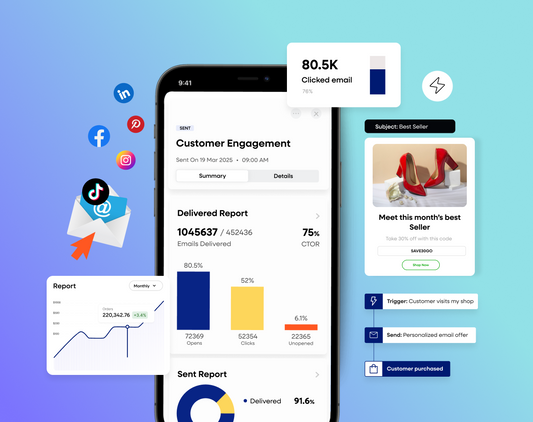
Ecommerce Performance Optimization for Email Ma...
Email marketing is a pivotal part of eCommerce success in 2025. Studies show that for every $1 spent on email marketing, businesses earn $42, making it one of the most...
Ecommerce Performance Optimization for Email Marketing: 2025 Guide
Email marketing is a pivotal part of eCommerce success in 2025. Studies show that for every $1 spent on email marketing, businesses earn $42, making it one of the most profitable digital marketing tools. Still, many businesses don’t use it to its full potential, missing out on a lot of possible income. To thrive in today's competitive market, brands must focus on eCommerce performance optimization for their email campaigns. Why email marketing still reigns supreme in 2025? With the surge of social media platforms and evolving digital marketing channels, you might wonder why email marketing still holds such power. The answer is simple: personalization and direct communication. Unlike social media, where algorithms dictate visibility, emails land directly in your customer's inbox. These offer a personalized touch that fosters trust & engagement. Personalized email campaigns can boost click-through rates by 14% and increase conversions by 10%. When you add smart eCommerce strategies, these results can grow even more, leading to real business growth. Moreover, emails give brands control over their audience, unlike social media platforms that can change their rules or algorithms at any time. With an email list, you always have a steady, reliable way to connect with your customers. 9 ecommerce performance optimization tips 1. Segment your audience for precision targeting Generic email campaigns don’t cut it anymore. To get the best results, you need to segment your audience. Break them into groups based on age, buying habits, behavior & how they interact with your emails. This way, you can send content that really connects with each segment. Actionable tip: Use dynamic content to personalize product recommendations. Create segmented lists based on customer behavior (e.g. cart abandoners, repeat buyers, inactive subscribers). Segment by location to send localized offers or event invitations. Why it works: Segmented campaigns can achieve up to 760% increase in revenue, according to Campaign Monitor. When customers see content that matches their interests, they’re more likely to engage, trust your brand, and come back to buy again. Example: A clothing store groups its customers by gender and what they’ve bought before. Instead of sending the same email to everyone about a new collection, they can make it personal. For example, they might show winter jackets to people who recently bought sweaters or suggest summer dresses to those who purchased sandals. 2. Optimize your subject lines Your subject line must be a hook! It determines whether the recipient will open or ignore your email. Crafting compelling, curiosity-driven subject lines while maintaining clarity is crucial. Actionable tip: A/B test subject lines to see what resonates with your audience. Keep subject lines under 50 characters and make preheaders complementary. Use emojis sparingly to grab attention, but ensure they align with your brand voice. Why it works: Personalized subject lines boost email open rates by 26%. A good subject line grabs attention. It sparks curiosity & creates urgency making people more likely to open the email. Example: A beauty brand might test two subject lines: Your Skin Deserves This Glow 🌟 Unlock 20% Off Your Favorite Products! By analyzing open rates, they can determine whether their audience responds better to emotional appeal or direct discounts. 3. Harness the power of automation Automation is a performance booster. Setting up automated workflows for welcome emails, cart abandonment reminders & post-purchase follow-ups ensures timely communication. Actionable tip: Implement a "win-back" campaign targeting inactive customers. Use trigger-based emails for special occasions like birthdays or anniversaries. Create post-purchase sequences that offer care tips, product recommendations, or loyalty rewards. Why it works: Automated emails generate 320% more revenue than non-automated emails. They help your brand stay fresh in people’s minds and build relationships without you having to put in effort all the time. Example: An online bookstore can set up an automated series: Thank you email: Sent immediately after purchase, thanking the customer. Follow-up email: 1 week later, suggesting similar books. Review request: After 2 weeks, asking for a review of the purchased book. 4. Mobile optimization Over 70% of emails are opened on mobile devices. If your emails aren't mobile-friendly, you're missing out on huge revenue. Actionable tip: Use responsive design to ensure emails look great across all devices. Keep your call-to-action (CTA) buttons large and easy to tap. Optimize image sizes for faster loading and faster email rendering. Why it works: Mobile-optimized emails can lead to a 15% increase in click-through rates. A seamless mobile experience ensures that subscribers can easily read, interact & convert, regardless of the device they're using. Example: A food delivery service ensures that its promotional emails have clear, clickable "Order Now" buttons and concise copy that's easy to skim on a smartphone. 5. Leverage data analytics for continuous improvement Data is key to improving your eCommerce performance. Study email stats like open rates, clicks & conversions. Use what you learn to tweak and improve your strategies. Actionable tip: Use heatmaps to see where subscribers are clicking. Track customer journeys to identify drop-off points. Compare different campaigns to identify trends and successful elements. Why it works: Companies that use data-driven email marketing strategies see 5x higher ROI. Knowing what works and what doesn’t helps you focus on the strategies that bring good results and drop the ones that don’t. Example: A fitness brand notices that emails with video content have higher engagement. They incorporate short workout clips in future campaigns, leading to increased click-through rates and conversions. 6. Create engaging, value-driven content Your emails should offer more than just promotions. Providing valuable content like tips, how-to guides, or industry insights, keeps your audience engaged and builds long-term relationships. Actionable tip: Incorporate storytelling to make your emails more relatable. Use user-generated content to build community trust. Share exclusive behind-the-scenes content or sneak peeks to make subscribers feel special. Why it works: Engaging content can increase subscriber retention rates by up to 40%. If your emails offer value instead of just being about transactions, people are more likely to stay subscribed and interested. Example: A skincare brand might share seasonal skincare tips, featuring real customer testimonials or before & after photos, to create a sense of community and trust. 7. Test, iterate, and optimize Optimization is an ongoing process. Regularly testing different elements of your emails (design, content, timing) can uncover valuable insights and help you continuously improve. Actionable tip: A/B test email layouts and sending times. Experiment with different CTAs to see what drives the most clicks. Analyze the impact of sending frequency on engagement and unsubscribe rates. Why it works: Brands that consistently test and optimize their emails see 37% higher revenue growth. Continuous improvement ensures that your strategies evolve alongside your audience's preferences. Example: A travel agency tries sending emails on different days of the week. They find that people respond more to emails sent on weekends, which leads to more bookings. 8. Integrate your email marketing with other channels For eCommerce performance optimization, integrate your email marketing with your social media, website & paid advertising strategies to create a cohesive customer journey. Actionable tip: Use email to drive traffic to your social media campaigns. Retarget email subscribers with personalized ads on social platforms. Include social sharing buttons in your emails to encourage audience growth. Why it works: Integrated campaigns can result in a 24% increase in conversion rates. Using multiple channels helps keep your message consistent and gives you more chances to connect with your audience. Example: A fashion retailer promotes a limited-time sale via email, retargets email subscribers with Facebook ads, and encourages followers to share their purchases on Instagram, creating a unified campaign across channels. 9. Focus on deliverability and compliance Even the most well-written emails won’t get results if they don’t land in your audience’s inbox. It’s important to keep your deliverability rates high and follow rules like GDPR and CAN-SPAM. Actionable tip: Regularly clean your email list to remove inactive subscribers. Use double opt-ins to confirm subscriptions and reduce bounce rates. Monitor your sender reputation and avoid spammy practices. Why it works: High deliverability rates ensure that your messages reach your audience, while compliance builds trust and protects your brand from legal issues. Example: An online electronics store implements a double opt-in process, resulting in a more engaged and responsive email list, with fewer spam complaints and higher open rates. Final thoughts Digital marketing is constantly evolving, so it’s important to keep learning and adapting. When you optimize your email marketing for better eCommerce performance, you not only improve your current results but also create a solid plan for long-term growth. Remember, the key to success lies in personalization, automation, data-driven decisions, and constant iteration. Implement these strategies and watch your email marketing transform from a basic tool into a powerhouse for your eCommerce business. Are you ready to take your email marketing to the next level? Start optimizing today and unlock your store's full potential in 2025! PS. Don't just follow trends - set them. Stay proactive in refining your email marketing strategies and embrace the power of eCommerce performance optimization to stay ahead of the curve.
Read More
10 Ecommerce Hacks to Optimize Online Store for...
The global eCommerce market is projected to reach $8.1 trillion by 2026, yet nearly 69.57% of online shopping carts are abandoned before checkout. It's important to optimize online store for...
10 Ecommerce Hacks to Optimize Online Store for Sales
The global eCommerce market is projected to reach $8.1 trillion by 2026, yet nearly 69.57% of online shopping carts are abandoned before checkout. It's important to optimize online store for sales if you want to stay ahead and boost conversions. Whether you run a startup or an established brand, these 10 powerful eCommerce hacks will help you maximize sales and enhance customer experience. How to optimize online store for sales? Here are ten easy hacks to follow if you want to optimize online store for sales: 1. Optimize your product page Your product page is the sales powerhouse of your eCommerce store. If it's not engaging, informative, and well-structured, customers will leave without purchasing. A well-optimized product page convinces potential customers that they need THE PRODUCT. High-quality images & videos: Shoppers rely on visuals to assess a product. Use multiple angles, zoom features, and even short demo videos. Compelling product descriptions: Focus on benefits rather than just technical features. Use storytelling to engage customers. Clear call-to-action (CTA): Ensure CTAs like "Add to Cart" or "Buy Now" are easy to locate and compelling. SEO optimization: Incorporate relevant keywords to improve search engine rankings and drive organic traffic. Mobile-friendly design: Ensure pages load fast and display correctly on all devices. 💡 Pro Tip Pages with customer reviews experience a 270% higher conversion rate than those without. 2. Offer FREE shipping What's better than free shipping? Free Shipping! Customers love free shipping. 73% of online shoppers say free shipping influences their decision. It's often the deciding factor between purchasing the product or abandoning the cart. Offering free shipping brings down cart abandonment and encourage higher order values. Provide free shipping above a specific order value to motivate customers to add more products to their cart. Consider factoring shipping costs into product pricing to offer "free" shipping without affecting your profit margins. Ensure your shipping policies are transparent, so customers don't face hidden fees at checkout. Use real-time shipping calculators to set accurate delivery expectations. 3. Use upsell and cross-sell techniques Upselling and cross-selling can boost revenue by up to 30% when implemented effectively. These techniques encourage customers to purchase higher-value products or add complementary items to their cart. Upselling: Suggest a premium version of the product. For example, if a customer is buying a laptop, recommend one with higher RAM or storage. Cross-selling: Recommend products that complement their purchase, such as suggesting a phone case and screen protector when someone buys a smartphone. Personalized recommendations: Use AI-driven tools to suggest relevant products based on customer behavior. Bundle deals: Offer discounts on product bundles to increase order value. 4. Create urgency A little FOMO can work wonders to optimize online store for sales. When customers feel they might lose out on a great deal, they are more likely to make a purchase. Use limited-time offers ("Only 3 hours left!") to encourage immediate action. Display low-stock alerts ("Hurry! Only 2 left in stock.") to drive urgency. Implement countdown timers on product pages or at checkout. Highlight seasonal or flash sales to create excitement. Fact: Countdown timers can increase conversion rates by 9%. 5. Personalize the customer experience 80% of shoppers are more likely to buy from brands that personalize their experience. They expect personalized experiences, and failing to deliver can hurt conversions. Offer personalized product recommendations based on browsing history and past purchases. Send targeted email campaigns with product suggestions and exclusive discounts. Use dynamic content on your website that adapts to each visitor's preferences. Implement chatbots and AI-driven support for tailored assistance. 6. Offer a loyalty program A well-structured loyalty program can increase customer retention and repeat purchases. Customers love being rewarded for their loyalty, and a good rewards program can turn one-time buyers into lifelong customers. Reward points for every purchase, referral, or social media engagement. Offer exclusive deals and early access to VIP customers. Implement gamification elements (badges, tiers, and challenges) to encourage participation and engagement. Provide cashback or discounts for returning customers. Stat: Returning customers spend 67% more than first-time buyers. 7. Make checkout easy and fast Customers don't want to jump through hoops to buy a product. A simple, hassle-free checkout process can significantly improve conversions. Enable guest checkout to avoid forcing account creation. Use auto-fill and saved payment details to speed up transactions. Provide multiple payment options such as digital wallets, credit/debit cards, and Buy Now Pay Later (BNPL) services. Minimize form fields to reduce checkout friction. Tip: One-click checkout can reduce cart abandonment by 20%. 8. Provide excellent customer service Always remember that the Customer is God! Poor customer service can drive potential buyers away, while great service keeps them coming back. Offer live chat support for real-time assistance. Ensure a clear and easy return policy to build customer trust. Utilize chatbots and AI automation to provide 24/7 support. Engage customers on social media and via email to address their concerns proactively. Provide self-service FAQs and help centers for quick solutions. 9. Use Social Proof Customers trust other shoppers more than they trust brands. Leveraging social proof can boost credibility and encourage hesitant shoppers to buy. Feature customer reviews & testimonials on product pages. Display user-generated content (UGC), such as photos or videos of real customers using your product. Use trust badges and certifications to assure security and quality. Feature influencer endorsements and social media mentions to reach a broader audience. Highlight media mentions or press features for additional credibility. Fact: 90% of consumers trust recommendations from other customers than ads. 10. Continuously Test and Optimize Optimization is an ongoing process. What works today might not work tomorrow, so it's important to test and refine your strategies regularly. Conduct A/B testing on product pages, headlines, and CTAs to identify what resonates most with customers. Use heatmaps and session recordings to understand how users navigate your website. Analyze data using Google Analytics and eCommerce tools to make data-driven decisions. Keep up with industry trends & competitor analysis to stay ahead. Stat: A/B testing can boost conversion rates by 50% or more when done strategically. Final Thoughts To optimize online store for sales, you need a mix of data-driven strategies and customer-centric tactics. By implementing these 10 proven eCommerce hacks, you'll enhance user experience, build customer trust, and maximize sales.
Read More
Do You Need a CRO Agency? 5 Signs It's Time to ...
If you've ever felt like your website is underperforming despite the traffic it generates, you're not alone. Many businesses experience the same problem: more visits but low conversion rates. This...
Do You Need a CRO Agency? 5 Signs It's Time to Hire Experts
If you've ever felt like your website is underperforming despite the traffic it generates, you're not alone. Many businesses experience the same problem: more visits but low conversion rates. This is where Conversion Rate Optimization (CRO) comes in. You may be devoting resources to generating traffic to your website, but if they aren't taking the actions you want them to, you're losing out on potential consumers. So, how can you know when to call in the experts? 5 Signs Employing a CRO Agency Might be Your Next Wise Business Decision 1. Your conversions are stagnant Are you getting thousands of visitors to your website, but only a few are converting? Perhaps customers aren't filling out contact forms, scheduling consultations, or making purchases as frequently as expected. It is an obvious red flag if your site receives a lot of traffic but does not convert into sales or leads. There's a difference between attracting visitors to your website and encouraging them to take action. This is when a CRO agency steps in. These specialists can assist you in identifying the hurdles that prevent visitors from converting. They'll sift through your data, examine user behavior, and determine exactly where things are going wrong. They will not only identify the problems but also test and implement solutions to address them. This means you can begin to see real results from your marketing efforts rather than simply increasing traffic for the sake of it. 2. Your bounce rate is high. We've all done it: clicked on a website, took a quick look, and then clicked away. If your bounce rate is high, it's a clear indication that something isn't right. Visitors are visiting your website but leaving nearly immediately. Reasons for high bounce rates: Slow loading times: We live in a world where speed is important. If your website takes more than a few seconds to load, visitors will leave. Poor design: Visitors may leave if your website isn't visually appealing or easy to use. Lack of clarity: Are your messages clear? If users can't figure out what your company offers in seconds, they'll walk on. A CRO agency will investigate the causes of your high bounce rate and recommend remedies customized to your audience. This could include enhancing your website's appearance, messaging, or speed. Small modifications can significantly improve visitor engagement. 3. You are unsure how to improve UX. User experience is an important component in deciding how likely visitors are to convert on your website and landing page. It refers not only to the usability of your platform but also to things like site performance, mobile optimization, easy navigation, and compelling content. Assume visitors experience delayed loading times or find it difficult to navigate your site owing to unclear layouts or poor design decisions. In that instance, they are likely to depart without converting, regardless of how appealing your items or services are. According to a Google research, increasing page load times from one to three seconds raised bounce rates by 32%. Similarly, according to Forrester Research's survey results, approximately 77% of customers believe that valuing their time is the most important thing a firm can do while offering online services. A skilled CRO consultant can greatly improve these characteristics. They have the skills and knowledge required to conduct extensive UX audits, which include a critical examination of each touchpoint in the user experience, from the landing page to the last conversion stages. 4. Your ROAS is alarmingly low! Are you getting consistently low returns on your ad spend? If you're driving targeted traffic with well-crafted ads but still failing to convert leads into customers, the issue is most likely with your website. Visitors may be interested enough to click on your ad, but something about the landing page may cause them to abandon their path before converting. This could be due to irrelevant content, unclear navigation, bad design aesthetics, or a lack of compelling call-to-actions. 5. Your marketing efforts aren’t paying off. You're running advertising, publishing social media material, and participating in email marketing initiatives, but the results aren't there. If you're investing in marketing but not seeing the results you expect, it's possible that the problem isn't with the marketing itself, but with your website's conversion rate. Spending money to increase traffic to your website without optimizing it for conversions is like pouring water into a leaky bucket. You will see a lot of traffic but not enough results that are relevant to your business. CRO services may fill those gaps by guaranteeing that visitors to your website are more likely to convert. Conclusion Conversion Rate Optimization (CRO) can assist your organization in converting visitors into customers and improve the ROI of marketing efforts. However, as with any specialty service, CRO necessitates knowledge and the appropriate instruments. If you've noticed any of the above symptoms, it may be time to hire a CRO agency to assist you in moving your business to the next stage. They will not only use data to improve your site, but they will also save you time and prevent you from making the costly mistake of depending on guesswork. Hiring a CRO firm is more than just addressing a problem; it's about future-proofing your company, ensuring that it continues to grow and succeed in an ever-more competitive industry. Are you ready to get greater results from your website? If so, a CRO agency may be just what you need to reach your company's full potential.
Read More
Supercharge Your Business Growth Using Conversi...
In the fast-paced digital marketplace, achieving sustainable business growth is any entrepreneur's ultimate goal. Yet, many businesses focus heavily on driving traffic to their websites without optimizing how that traffic...
Supercharge Your Business Growth Using Conversion Rate Optimization Services
In the fast-paced digital marketplace, achieving sustainable business growth is any entrepreneur's ultimate goal. Yet, many businesses focus heavily on driving traffic to their websites without optimizing how that traffic converts into paying customers. This is where CRO becomes the game-changer. By revamping your website and marketing strategies, you can transform visitors into loyal customers and significantly boost your revenue. What is Conversion Rate Optimization? CRO is the process of enhancing your website to increase the percentage of visitors who complete a desired action, from making a purchase, signing up for a newsletter to filling out a contact form. CRO combines: data analysis user behavior insights strategic design changes Importance of Conversion Rate Optimization Services Investing in conversion rate optimization services gives you a competitive edge. These services identify and remove obstacles that stop users from converting. By leveraging expert insights, you can Increase ROI from existing traffic. Gain a deeper understanding of user behavior. Build a more intuitive and engaging UX. How CRO Drives Business Growth 1. Maximizing the Value of Website Traffic Every visitor to your website is an opportunity. CRO saves you from spending more to attract new visitors. It maximizes your budget while driving sustainable growth. This strategy ensures long-term success by focusing on optimization. 2. Enhancing UX A user-friendly website keeps visitors engaged. Through CRO, businesses can address and resolve issues such as: slow page loading times confusing navigation unappealing design elements, and more. It helps create a better overall experience, encouraging visitors to take action 3. Boosting Customer Trust and Loyalty Websites optimized for conversion tend to instill greater trust. Clear calls-to-action (CTAs), straightforward checkout processes, and transparent policies all contribute to building credibility. Satisfied customers are more likely to return and recommend your brand to others. Key Strategies for Effective CRO 1. Data-Driven Decision Making Effective CRO starts with analyzing website data. Tools like Google Analytics, heatmaps, and user session recordings can reveal where visitors are dropping off or losing interest. By identifying high-exit pages, you can address specific areas for improvement. 2. A/B Testing A/B testing involves comparing two versions of a webpage to determine which performs better. You can test elements like: headlines button colors form placements, and more. It ensures that you're always optimizing for the best 3. Simplifying Navigation Complicated website navigation can confuse users. Keep menus simple and guide them to key information. A clear layout helps users stay focused and convert more easily. 4. Mobile Optimization With mobile devices accounting for a large portion of web traffic, optimizing for mobile is non-negotiable. Ensure your site is responsive and offers a smooth experience on smaller screens. From quick load times to easy-to-click buttons, every detail matters. 5. Crafting Persuasive CTAs Make your calls-to-action clear and exciting. Skip the boring "Click Here" and go for phrases like "Start Your Free Trial" or "Get Instant Access." Where you place them and how they look matter just as much. Why Partner with Conversion Rate Optimization Services? You can handle CRO on your own, but working with professionals in conversion rate optimization services gives you a big advantage. These experts have the experience, tools & proven methods to deliver results. They can: Conduct in-depth audits Implement sophisticated testing frameworks Provide tailored strategies for your business Measuring the Success of CRO Efforts Track the following key performance indicators (KPIs) to measure the success of your efforts: Conversion rates across different pages Bounce rates and time spent on site Revenue per visitor (RPV) Customer lifetime value (CLV) This way, you can continuously ensure improvements. Final Thoughts Conversion Rate Optimization is no longer a luxury; it’s a necessity in today’s competitive market. By focusing on maximizing the potential of your existing traffic, enhancing user experience, and leveraging the expertise of conversion rate optimization services, you can unlock new levels of business growth. Start your CRO journey today and transform casual browsers into loyal customers. Whether you’re a startup or an established enterprise, embracing CRO can help you achieve your growth ambitions. Are you ready to supercharge your business? The time to act is now.
Read More
How Shopify Experts Can Help You Scale Your eCo...
Running an internet store can be difficult, especially if your business grows quickly. Shopify is one of the greatest eCommerce platforms, with over 4.1 million websites using it globally. The...
How Shopify Experts Can Help You Scale Your eCommerce Business?
Running an internet store can be difficult, especially if your business grows quickly. Shopify is one of the greatest eCommerce platforms, with over 4.1 million websites using it globally. The Shopify Partner ecosystem is made up of third-party eCommerce experts who assist people in realizing their entrepreneurial goals. They're frequently entrepreneurs themselves, creating apps and providing services like web design, programming, shop setup, and marketing strategy. You may need to hire Shopify specialists to fine-tune your store so that it performs optimally. With a professional on board, you can provide a more smooth shopping experience, increase sales, and remain ahead of the competition. Did you know that the design of a website influences 75% of users' perceptions of its credibility? This demonstrates how crucial it is to maintain a user-friendly store. Keep reading to learn how Shopify experts help you scale your business. What do Shopify Experts do? Shopify experts offer various services designed to help businesses succeed on the Shopify platform. Here are the key services they offer: 1. Store Setup and Customization Shopify experts can help you start a new store from scratch. They assist you in selecting the appropriate theme to match the brand's style. They also personalize the store layout to create a pleasant shopping experience for customers. This includes adding product listings, building pages, and enabling payment channels. 2. Theme Development and Customization If the default themes do not fit the brand's vision, Shopify experts can create custom themes. They use coding talents to customize a store's style and functionality, helping firms to stand out with a distinct appearance. Custom themes also ensure that the store works properly on desktop and mobile platforms. 3. App Integration and Development Shopify experts assist with integrating third-party apps that enhance the store's functionality. They select and configure applications for marketing, inventory, shipping, and customer service. They can also create custom apps to meet unique demands. Proper app integration streamlines business operations and improves customer experience. 4. SEO and Digital Marketing Shopify experts focus on optimizing the store for search engines. They manage keyword research, meta tags, and content development to increase the store's online presence. Along with SEO, they may design and manage digital marketing strategies. This includes creating commercials, email marketing, and social media promotions to increase traffic and sales. 5. Product and Inventory Management Managing products and inventories is crucial for any online business. Shopify experts help with product uploads, description writing, and collection setup. They also offer solutions for inventory and order management. Proper product arrangement makes it easier for customers to find what they need, which enhances the shopping experience. 6. Migration to Shopify Businesses wishing to move to Shopify from another platform may rely on experts to ensure a smooth migration. They handle data migration for items, customers, and order histories. The professionals ensure that the new Shopify store maintains its original design and feel. They also thoroughly test the business to ensure that there are no issues after it goes live. 7. Ongoing Support and Maintenance Shopify experts provide ongoing assistance to ensure the store runs properly. They monitor store performance, correct errors, and update features as necessary. Regular maintenance ensures that the store is secure and operates properly. With this assistance, online businesses can concentrate on expansion without worrying about technical issues. Top 7 Reasons to Hire Shopify Experts 1. Professional Store Setup Hiring Shopify experts ensures that your store is professionally set up from the beginning. They understand the optimal layout, navigation, and design principles to improve the user experience. Experts may tailor your store to reflect your brand and set it out from the competition. They handle technical settings, which saves you time and prevents costly mistakes. With a professional setup, your store will be ready to attract paying clients immediately. 2. Custom Design and Development Shopify professionals can design a store that is suitable for your brand. They create themes to fit your own vision, so you don't have to settle for a generic design. With their skills, your store will appear professional and stand out, attracting and retaining customers. 3. Advanced Features and Integrations Shopify eCommerce experts know how to implement features that will elevate your store to the next level. They can incorporate important features such as payment gateways and inventory management. These professionals guarantee that all aspects work seamlessly together. You get a smooth store with extensive features. 4. Improved Store Performance A slow store may turn customers away. Shopify experts can optimize your store for faster loading times by modifying settings and code to ensure that your site runs smoothly. Better performance leads to a better shopping experience, resulting in increased sales and happy customers. 5. SEO and Marketing Expertise Shopify professionals know how to optimize your store for higher search engine rankings. They employ SEO best practices to increase product visibility. Experts can also assist with marketing tools and techniques to attract customers. This improves your store's internet presence. More traffic = more potential sales. 6. Ongoing Support and Maintenance Maintaining an online store necessitates frequent updates and adjustments. Shopify professionals provide ongoing assistance to maintain your store in great condition. They deal with upgrades, problems, and other technological concerns that emerge. This support provides you with peace of mind. You may focus on expanding your business while they manage the rest. 7. Experience with Shopify Plus Shopify professionals understand how to utilize Shopify Plus benefits. They set up the advanced features that this platform provides. Experts can perform complicated customizations designed for large-scale businesses. With their expertise, you can get the most out of Shopify Plus. This allows your store to grow and handle huge traffic efficiently. Conclusion Finally, employing Shopify professionals can significantly benefit your growing eCommerce firm. They help you save time, prevent frequent mistakes, and maximize the potential of your online store. From personalization to seamless connectivity, specialists ensure that your store stands out and operates effectively. If you want to focus on growth and get the most out of Shopify, hire experts. Nivara Commerce's experienced Shopify experts are ready to assist you in achieving your eCommerce goals. Let us manage your store so you can concentrate on building your business.
Read More
Maximize Your Website's Potential: How a CRO Ag...
In today’s competitive eCommerce space, your website isn’t just an online store - it’s a powerful tool to drive conversions, generate leads, and build customer loyalty. But what happens when...
Maximize Your Website's Potential: How a CRO Agency Drives Results
In today’s competitive eCommerce space, your website isn’t just an online store - it’s a powerful tool to drive conversions, generate leads, and build customer loyalty. But what happens when your website traffic isn’t converting? This is where a Conversion Rate Optimization (CRO) agency steps in. A CRO agency helps transform it into a results-driven machine. Let’s uncover how they maximize your website’s potential. And why partnering with one could be the best decision for your business. What is a CRO Agency? A CRO agency is a team of experts specializing in enhancing your website’s performance to ensure visitors take desired actions. Whether it’s making a purchase, signing up for a newsletter, or booking a demo, they ensure the visitors perform these actions on your website. CRO experts analyze, strategize, and implement changes to optimize every user interaction, driving measurable results. How Does a CRO Agency Drive Results? 1. Data-Driven Audits and Insights CRO agencies don’t rely on guesswork. They start by analyzing data to understand how users interact with your website. Tools like heatmaps, session recordings & analytics reveal key insights about: Where users drop off What elements catch their attention How long they spend on each page Using these insights, the agency identifies pain points and 2. User Behavior Analysis Understanding your audience is the most important. By studying buyer personas, behavior patterns & preferences, CRO agencies help drive results. Here's what they do: Conduct surveys to understand user intent Test different messaging strategies Build a user journey map to smoothen navigation paths CRO isn’t just about aesthetics; it’s about creating intuitive, seamless experiences. By optimizing navigation, improving page load speed, and simplifying forms, agencies ensure your site keeps users hooked. Imagine having two versions of a webpage and knowing exactly which one performs better. That’s the power of A/B testing. CRO agencies experiment with page layouts, CTAs, and even the tiniest design elements to refine your site. Pro Tip: Sometimes, a color change on a button can mean a 10% uplift in conversions. What Sets a CRO Agency Apart? CRO agencies know there’s no one-size-fits-all strategy, and that’s why they offer tailored solutions for maximum impact. Specialized Tools and Expertise From heatmap trackers like Hotjar to advanced analytics platforms, CRO agencies use cutting-edge tools to uncover insights you might miss. Plus, their team of strategists, designers, and data scientists are pros at turning insights into action. Objective Perspective Sometimes, businesses are too close to their own websites to see flaws. CRO agencies bring a fresh, unbiased perspective to identify areas for improvement. Proven Methodologies CRO isn’t a one-size-fits-all approach. Agencies tailor strategies to your specific audience, industry & goals, ensuring every tweak aligns with your brand’s unique identity. Here’s how they tailor solutions: Website OptimizationFrom loading speed to mobile responsiveness, they ensure your website provides a seamless user experience. Content RefinementThe right words make all the difference. CRO agencies optimize content to make it clear, concise, and compelling. Visual EnhancementsImages, videos, and graphics are more than aesthetics; they’re tools to engage users. Agencies ensure these elements are aligned with your brand and conversion goals. What Results Can You Expect from a CRO Agency? One of the most rewarding aspects of working with a CRO agency is their commitment to delivering measurable outcomes. You can measure your business’s success with results that speak volumes. Key metrics include: 1. Higher Conversion Rates This one’s a no-brainer. By addressing user pain points, CRO agencies help convert more visitors into paying customers. 2. Improved ROI on Marketing Efforts Why pump more money into ads when you can maximize the value of your current traffic? CRO enhances the impact of your existing marketing spend. 3. Enhanced User Experience (UX) A side benefit of CRO is a polished website experience that keeps customers coming back for more Data-Backed Growth Strategies With all the insights gathered, CRO agencies equip you with a roadmap for long-term success. Why Choose Nivara Commerce for CRO Services? At Nivara Commerce, we understand that your website is more than a digital storefront; it’s a conversion machine waiting to be fine-tuned. Our team of CRO experts combines creative thinking with analytical precision to deliver strategies that drive measurable results. Here’s our approach: Comprehensive audits to identify growth opportunities Tailored testing strategies to optimize performance Ongoing analysis to keep your conversions climbing Conclusion Partnering with a CRO agency isn’t just an investment; it’s a game-changer for your business. With the right team by your side, your website can go from merely functional to fantastically profitable. Are you ready to turn browsers into buyers? Get in touch with us and discover how to unlock your business’s true potential.
Read More
Choosing the Best Ecommerce SEO Agency: Key Qua...
Have you ever felt overwhelmed by the sheer number of SEO services out there, each claiming to be the best? You are not alone. Finding the appropriate SEO agency is...
Choosing the Best Ecommerce SEO Agency: Key Qualities to Look For
Have you ever felt overwhelmed by the sheer number of SEO services out there, each claiming to be the best? You are not alone. Finding the appropriate SEO agency is important. If you're looking for a strategic partner that can help alter your online presence, you’re in the right place. If your website isn't ranking as well as you'd like, it may be time to rethink your SEO strategy. Is it actually in line with your business goals? The right eCommerce SEO agency can make a significant difference in refining your strategy and effectively increasing your ranks. In this blog, we'll go over how to choose the best eCommerce SEO agency that matches your goals and improves your dig How to Pick The Best Ecommerce Marketing Agency? 1. Establish your goals and desired outcomes. Consider setting off on a journey with no destination. That is not something you would do, right? Similarly, before working with an SEO service, it is critical to specify exactly what you want your business to accomplish and where you want it to go. First, determine your business goals. Are you looking to increase brand visibility? Increase website traffic? Drive sales? Each goal necessitates distinct SEO tactics. Next, determine your targeted outcomes. Do you need to rank higher for certain keywords? Increase your local search presence? Convert more visitors into clients. The specifics of your goals will determine whether you require complete content strategies, local SEO skills, or complex link-building techniques. You may need to utilize a combination of these approaches at different stages of your campaign. Consider different methods for different business types: Local Shops: Goal: Attract nearby customers.Strategy: Concentrate on local SEO techniques such as enhancing Google My Business listings, local keywords, and community interaction. Ecommerce Website: Goal: Expand national reach. Strategy: Use wide SEO tactics such as large-scale link development, national keyword optimization, and competitive analysis. Choosing the appropriate eCommerce SEO agency entails finding one that shares your aims and has the knowledge required to guide your company to success. It's about aligning your business goals with the appropriate SEO methods and knowing how they relate to measurable SEO KPIs. Make sure the SEO agency you hire understands your business and shares your goals for success, so they can guide you properly. 2. Investigate the eCommerce agency’s experience. The first thing you should examine is how much experience the eCommerce marketing agency has. Find out how long the organization has been conducting eCommerce marketing and ask for portfolios. A credible firm will include this information on its website, making it easier to determine the level of work it can create. You'll also want to assess the agency's fundamental experience in ecommerce digital marketing. Some Internet marketing organizations specialize in specific areas, such as conversion rate optimization (CRO), while others provide a broad range of services, including web design and SEO. Determine exactly what you want to improve with your eCommerce marketing efforts and hire a service that specializes in those areas. Hire an ecommerce web design agency today. 3. Read the eCommerce agency’s case studies. You should also analyze the agency's track record. How effective has the organization been in assisting other eCommerce businesses in achieving their online marketing objectives? Successful marketing organizations will discuss their accomplishments and success stories. These examples should be supported with data, testimonials, and reviews. If you intend to invest money in an online marketing strategy, you must be confident in the agency's capacity to provide results. 4. Research the eCommerce SEO agency’s pricing. If you're like most eCommerce businesses, you likely have a budget for each of your marketing platforms. Understanding price alternatives can help you select the best marketing firm for your project. However, don't focus too much on pricing, as this can lead you away from quality firms. In other words, you frequently get what you pay for when it comes to online marketing. If you can't decide between two companies, pricing can be used as a tiebreaker. However, cost should not be the most important consideration in your eCommerce marketing agency study. Red Flags to Avoid Choosing an eCommerce SEO agency is an important decision, and you should avoid those who do not have your best interests in mind. Here are some red signals to look for: 1. Guaranteed Rankings Be wary of any SEO business that promises particular rankings within a set time window. SEO is difficult and influenced by many factors outside anyone's control, including Google algorithm adjustments. Promises of guaranteed rankings are impractical and often indicate inexperience or dishonesty. 2. Quantity Over Quality Backlink Techniques The quality of backlinks is significantly more essential than the quantity. An agency that concentrates on creating extra low-quality connections may produce immediate results, but they are generally fleeting and can be harshly penalized by Google. Instead, seek out agencies that prioritize ethical, high-quality backlink tactics. 3. Ultra-Low Pricing If the price appears too good to be true, it probably is. While competitive pricing can be enticing, overly low charges may signal that the agency is cutting corners or outsourcing critical jobs to low-quality vendors. This can result in bad results, which can harm your site's long-term SEO performance. 4. No Portfolio or Client Testimonials A reputable eCommerce SEO agency should be proud to showcase its previous work. If an agency does not have a portfolio or client testimonials, it is a red flag. They may be inexperienced or have a history of bad performance. Always request case studies or references before making a choice. Looking for these red signals can help you choose an SEO service that can deliver results and bring value to your organization, as opposed to one that will cause aggravation and financial loss. Choose a partner who is trustworthy, transparent, and has an established track record. What Makes Nivara Commerce a Leading Ecommerce Marketing Agency? Nivara Commerce's skilled team of website designers, developers, strategists, and Internet marketers is ready to deliver customized solutions for your eCommerce business. Our eCommerce clients benefit from fully functional, high-performance, and user-friendly websites that enhance the user experience and generate revenue online. We assist our clients in not only managing their online marketing plan, but also growing their businesses through internet marketing. Read our client testimonials and case studies to understand why more than 90% of our clients choose us as their long-term partner.
Read More
Ankush Singh
FOUNDER, NIVARA COMMERCE
More Profit From The Traffic You Already Have.
We find the leaks.
I’ve audited 200+ Shopify stores in the last two years. Most didn’t need a redesign. They needed a better offer and fewer reasons not to buy.
We build the fix.
No report sitting in a folder. We design it, build it in your Shopify store and launch it.
We show you the profit.
Every change is measured against your baseline, so you see what it made you.
That's how I work, and that's how Nivara Commerce works.
Ankush Singh, Founder
No measurable lift in 45 days? You don't pay the rest.