
In This Story
You’ve put massive resources into finding new customers, you've optimized every ad set, and you've pushed your creative team to the limit. But lately, every extra dollar spent on acquisition seems to deliver diminishing returns—a clear signal that your market is reaching saturation and your competitors are closing the gap. This isn't a signal to panic; it's a strategic directive.
Sustainable e-commerce leaders know that when the hunt for new customers becomes financially exhausting, the future lies in the high-leverage opportunity you already own: your existing buyer base. Retention & Lifecycle Marketing is the discipline that turns a growth plateau into a growth multiplier.
In this post, we’ll move beyond basic loyalty tips to provide the strategic framework for maximizing Customer Lifetime Value (CLV), detailing the five essential stages of the customer journey, and giving you proven tactics to unlock a predictable, high-margin revenue engine that runs on loyalty, not leads.
What Is Retention & Lifecycle Marketing (and Why It Matters)
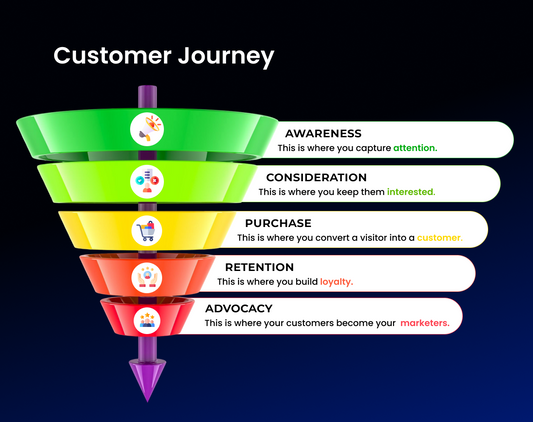
Forget the old school of thought that marketing is just a funnel that ends at "Purchase." That is a massive blind spot that kills margins.
Retention Marketing is the discipline of maximizing the Lifetime Value (LTV) of an existing customer. It isn't about the initial sale; it's about the second, third, and tenth purchase, strategically turning transactions into relationships.
Lifecycle Marketing is the strategic architecture that supports retention. It means mapping out every touchpoint—from the moment a customer signs up to their 5-year anniversary—and designing personalized, value-driven communication for each stage.
Why the Numbers Demand Retention
This isn't just fluffy brand building; it's about margin and predictability:
-
Cost Efficiency: Acquiring a new customer can cost 5x to 25x more than retaining an existing one. In 2025, where ad costs only rise, this difference is your profit buffer.
-
Predictable High Value: Loyal customers not only buy more frequently but spend significantly more per order and are less price-sensitive. A small 5% increase in customer retention can boost profits by 25% to 95% (Bain & Company). This is the single highest-leverage financial move you can make.
-
Trust Multiplies: The probability of selling to an existing customer is 60-70%, compared to 5-20% for a new prospect. You've already built the most expensive asset: trust.
The winners of tomorrow understand that turning your existing base into a predictable revenue stream is the ultimate strategic advantage over competitors stuck in the costly acquisition hamster wheel.
Why Most Brands Struggle with Retention
If the benefits are this clear, why do most e-commerce brands fail to capitalize on retention? It usually boils down to three strategic blind spots that we frequently see:
-
The Acquisition Addiction: Most marketing budgets are disproportionately focused on the top of the funnel (TOFU). They are optimizing the checkout flow when they should be optimizing the post-purchase experience. This is a critical failure of resource allocation.
-
Generic, "Spray-and-Pray" Communication: Treating all past buyers the same way. A customer who bought a product six months ago needs a different message than a loyal VIP who buys monthly. Without deep segmentation, the messaging is generic, intrusive, and ineffective, which results in high unsubscribe rates and low LTV.
- Transactional, Not Relational, Focus: Retention communication is often limited to "Buy Again" emails. True retention is built on value, education, and surprise. It’s about making the customer feel seen, not just sold to. If your post-purchase emails feel like a generic billboard, you're missing the opportunity to forge a relationship.
The solution is not to stop acquiring, but to build a Conversion-Driven Lifecycle Framework which starts working after the first purchase.
Proven Retention Tactics That Keep Customers Coming Back
Retention is a series of intentional, data-driven systems. These are the high-leverage tactics that transform one-time buyers into lifelong fans and provide measurable returns.
1. Subscription Programs:
If your product is consumable or needs refilling (supplements, coffee, skincare), auto-delivery is your LTV gold mine. The key is high perceived value and zero friction.
-
The Value Prop: Offer a clear, enticing discount (e.g., 15% off) plus maximum convenience.
- The Experience: Ensure the pause/skip/cancel process is effortless. We design these flows to be simple to manage—because high friction here kills trust immediately.

2. Tiered Loyalty Rewards Programs

Move beyond simple points. Loyalty programs must create an emotional connection and tangible value through status.
-
Structure: Implement escalating tiers (Silver, Gold, Platinum) with unique, non-monetary perks (e.g., early access, personalized services). Doing this gamifies the purchasing process and motivates customers to spend more to unlock the next status and boost Average Order Value (AOV).
-
Reward their actions such as leaving reviews, referring friends, or engaging with content, not just spending money.
3. Referral Programs

Your most satisfied customers are your most credible marketers.
- Dual-Sided Reward: Offer a scrollstopping reward to both the referrer (e.g., $20 credit) and the referred friend (e.g., $20 off their first order). Doing this really increases participation and conversion credibility.
4. Post-Purchase Upsells & Cross-Sells

The moment after the purchase is when trust is highest. Use this window for high-margin offers.
-
Focus on Complementary Items: You don't need to offer a better version of what they just bought. Offer items that naturally complete the experience (e.g., if they bought a main cosmetic product, upsell the matching applicator tool).Always try to optimize for one-click upsells immediately after checkout to maximize conversion without any friction.
5. Replenishment Reminders (Email/SMS)

Timing is everything here. Send automated reminders just before the customer runs out.
- Data-Driven Timing: Base the send time on average consumption data (e.g., 28 days for a 30-day supply), not arbitrary dates. This makes the message feel helpful, not salesy.
6. VIP-Only Early Access Drops
Create scarcity and exclusivity for your most valued customers.
-
The Perk: Give your top tier customers(e.g., Gold and Platinum members) 24-48 hour exclusive access to new products, limited editions, or seasonal sales before the general public. This drives loyalty, reduces sensitivity to price, and creates invaluable buzz.

7. Surprise Rewards and Delight
A small, unexpected gift or bonus creates a disproportionately large emotional impact.
- Moment of Delight: You can slip a free, relevant sample, a personalized thank-you card, or a coupon for a partner brand into their order. This breaks the transactional rhythm and creates brand love.

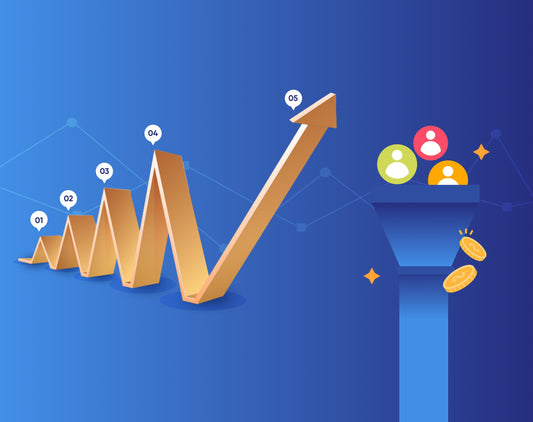
The Lifecycle Framework: A 5-Stage Playbook for Retention-Driven Growth
To implement these tactics effectively and systematically, you need a unified understandable strategy. This 5-stage framework makes sure every message is relevant, timely, and maximizes LTV.
Stage 1: Onboarding & Activation
This stage bridges the gap between the purchase and the first successful, high-value use of the product.
-
Goal: Ensure the customer uses the product correctly and immediately realizes its value (the "Aha!" moment). This is the biggest churn killer.
-
Tactics: Send a "How to Use" video series, a quick-start guide, and a check-in email to proactively solicit feedback and resolve early issues before they become returns.
Stage 2: Engagement & Nurture
This is the critical period between the first and second purchase—the conversion from "trial customer" to "repeat buyer."
-
Goal: Establish the brand as a valuable resource, not just a seller. Increase purchase frequency.
-
Tactics: Deliver non-promotional content (e.g., recipes, style guides, tutorials) that makes the product central to the customer's identity or routine. Use soft CTAs to related products.
Stage 3: Retention & Loyalty
For customers who have made two or more purchases. They are now your proven, loyal base.
-
Goal: Lock in loyalty, increase purchase frequency, and drive higher AOV through status.
-
Tactics: Fully enroll them in the Loyalty Rewards Program, grant VIP status access, and offer early access to new lines. Treat them like insiders.
Stage 4: Win-back & Reactivation
For customers whose purchase frequency has dropped off (e.g., haven't bought in 90+ days).
-
Goal: Re-engage them with a compelling, low-risk offer based on their previous behavior.
-
Tactics: Use a personalized "We Miss You" email with a deep-cut, one-time-use discount or highlight a brand new product that directly addresses their original need.
Stage 5: Advocacy & Referral
For your top-tier, most engaged customers (highest LTV).
-
Goal: Turn them into powerful, profitable brand evangelists.
- Tactics: Proactively invite them to the Referral Program, ask for detailed reviews, and feature their user-generated content (UGC) prominently on your site. Give them a platform; they'll do the marketing for you.

Retention in Action: How Top Brands Win the Long Game
The difference between a struggling brand and a category leader is in the intentional execution of the lifecycle.
Take Sephora. Their VIB Rouge tier is a masterclass in Loyalty that goes beyond discounts. It’s emotional status—exclusive gifts, early access to sales, and personalized concierge services. It makes the customer feel part of an elite club, creating massive switching costs that no competitor can overcome with a simple coupon.
Or consider Stitch Fix. Their entire model is a Lifecycle Engine. Their onboarding quiz (Activation) is an input for their stylists, leading to highly personalized shipments (Engagement). The convenience and the discovery process ensure that the second, third, and fourth boxes are almost guaranteed—turning a one-time purchase into a continuous, high-margin relationship.
These brands prove that the true conversion is not the first click, but the conversion from a customer to a fan.
Turn Retention into Your Growth Engine with Nivara
You have the traffic. You have the product. It’s time to stop letting high acquisition costs eat your margins and start building a predictable LTV stream.
Retention isn't a side project; it's a core architecture challenge. It requires a unified, data-driven approach across your tech stack, creative assets, and customer experience—from the first touchpoint to the last email.
If mapping out a 5-stage lifecycle framework, designing a tiered loyalty program, and integrating data-driven replenishment logic sounds complex, we can help. At Nivara Commerce, we audit your current retention architecture, design high-converting loyalty systems, and implement the necessary tech stack integrations to ensure retention is the reliable engine driving your next phase of growth.
Ready to stop chasing clicks and start maximizing LTV? Contact us today to schedule your retention architecture audit.