
In This Story
Most Shopify brands think growth comes from more traffic.
More ads. More creators. Bigger budgets.
But sustainable growth doesn’t come from traffic alone. It comes from monetizing the traffic you already have.
If your store converts at 2% and your average order value (AOV) is ₹2,000, you have a fixed revenue ceiling per visitor. Increasing traffic is expensive. Increasing AOV is often far more profitable.
That’s where smart cross-selling comes in.
When executed correctly, cross-selling increases revenue per session without hurting conversion rate. For Shopify brands relying heavily on paid acquisition, that improvement can significantly increase contribution margin and protect profitability.
Let’s break down how to optimize cross-selling across your product page (PDP), cart, and checkout funnel.
What Cross-Selling Really Means for Shopify Stores
Cross-selling is the process of recommending complementary products that enhance the primary purchase. If someone buys a laptop, you recommend a sleeve. If they buy skincare, you suggest sunscreen. If they order coffee beans, you offer a grinder.
This is different from upselling, which pushes a higher-priced version of the same product. Cross-selling expands the basket. Upselling upgrades the product.
For Shopify brands, cross-selling directly impacts:
- Average Order Value (AOV)
- Revenue Per Visitor (RPV)
- Contribution margin
When ad costs rise, AOV becomes one of the most important levers in your business. A 15% lift in AOV can often produce a larger revenue gain than a 15% increase in traffic — without increasing your acquisition cost.
The key is implementing cross-sells strategically across the funnel instead of randomly placing product suggestions.
The Psychology Behind High-Converting Cross-Sells

Cross-selling works because of decision momentum.
When a shopper clicks “Add to Cart,” they’ve crossed the biggest mental hurdle — saying yes. Adding a complementary item requires far less cognitive effort than making the first decision.
There’s also the principle of solution completion. Customers rarely want a single product. They want a finished outcome. If someone buys gym shoes, they likely need performance socks. If they buy a phone, they need a case.
When your recommendations feel like finishing touches and not additional expenses, the acceptance increases.
However, relevance is critical. If suggestions feel random, they reduce trust. If they feel helpful and contextual, they reduce effort and increase the perceived value.
For Shopify brands, this means one relevant cross-sell will outperform five generic recommendations.
Optimizing Cross-Selling on Your Shopify Product Page (PDP)

Your product detail page is one of the highest-intent pages in your funnel. Shoppers here are evaluating seriously.
That makes the PDP a powerful cross-selling opportunity — but only if it supports the primary purchase.
On Shopify stores, effective cross-sell placements typically appear just below the “Add to Cart” button, under the product description, or within a “Complete the Look” section. The key is subtlety. Your cross-sell module should not overpower the main CTA.
Frequently Bought Together bundles work especially well because they use implied social proof. When customers see that others commonly purchase these items together, hesitation decreases.
Simple add-on checkboxes also perform strongly. Offering gift wrapping, warranty extensions, or product protection plans via a single click keeps friction low. The customer doesn’t feel like they’re navigating away — they’re just enhancing their purchase.
Avoid cluttering the page with too many recommendations. Overloading the PDP can reduce clarity and harm conversion rate. Your goal here is to increase AOV without lowering the primary conversion.
Mobile optimization is essential. Most Shopify stores receive the majority of their traffic from mobile. Cross-sell modules must load quickly and never push the main CTA too far down the screen.
Turning the Cart Page Into a Revenue Multiplier

Once a customer reaches the cart, the intent is strong. Because, they’ve mentally committed to buying.
This makes the cart a high-leverage cross-selling opportunity.
Cart cross-sells work best when tightly aligned with what’s already in the basket. If someone adds protein powder, recommending a shaker bottle feels natural. If they’re buying a dress, suggesting matching accessories feels helpful.
Lower-priced add-ons often perform better here than premium products. A small increase in cart value feels manageable compared to a large price jump.
Free shipping thresholds are particularly effective on Shopify. If customers see they are just ₹300 away from qualifying for free shipping, many will add an extra product to reach that amount. This shifts shipping from a cost to a motivator.
However, the cart must remain clean. Slide-out cart drawers should not be overloaded with pop-ups and banners. Cross-sells should feel supportive, not aggressive.
The goal is to increase basket size while maintaining checkout momentum.
Checkout Cross-Selling Without Hurting Conversion

Checkout is sensitive. Introducing friction here can increase abandonment rates.
That’s why cross-selling inside checkout must be handled carefully.
Small order bumps tied to risk reduction — such as shipping insurance or extended warranties — tend to perform well because they feel protective rather than promotional.
For Shopify brands, post-purchase cross-selling is often the safest and most effective strategy. After payment is processed but before the thank-you page loads, presenting a one-click offer removes most friction. The customer has already paid. Adding another item requires only confirmation.
This allows you to increase AOV without disrupting checkout flow.
If your checkout conversion rate is underperforming, focus on fixing speed, trust signals, and clarity before layering cross-sell offers.
Using Data to Choose the Right Cross-Sell Products

Cross-selling should be data-driven.
Your Shopify analytics can reveal which products are frequently purchased together. Order history patterns and attach rates provide valuable insight into natural pairings.
Attach rate — the percentage of orders containing a cross-sell item — is one of the most important metrics to track. If the attach rate is low, your recommendations may lack relevance.
Margin analysis is equally important. High-margin accessories often make excellent cross-sell candidates because they increase profitability without drastically increasing fulfillment complexity.
As your store grows, personalization becomes more powerful. Showing different cross-sells based on browsing behavior or purchase history can significantly improve acceptance rates.
The more contextual your recommendations, the stronger your results.
Measuring and Scaling Your Cross-Selling Strategy

Cross-selling is not a one-time setup. It’s an optimization loop.
Monitor key metrics such as:
- Average Order Value (AOV)
- Revenue Per Visitor (RPV)
- Conversion rate
- Attach rate
- Cart abandonment rate
If AOV increases but conversion drops significantly, the overall impact may be negative. Balance is essential.
A/B test placement, product combinations, pricing structures, and bundle designs. Small changes in presentation can produce large differences in performance.
As your Shopify brand scales, cross-selling can evolve into a structured revenue system.
Dynamic bundles, subscription cross-sells, and personalized recommendations can all increase monetization without increasing traffic.
The goal is not to add more pop-ups.
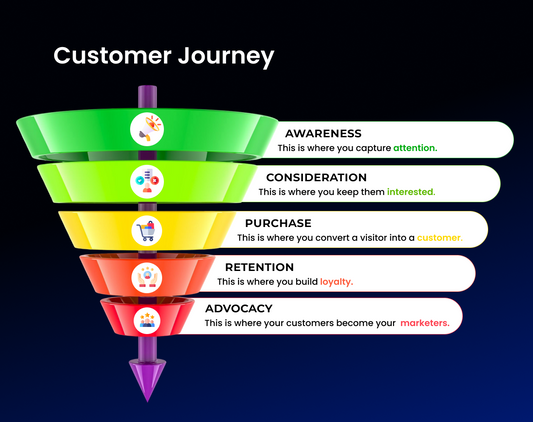
The goal is to design a funnel that maximizes revenue at every stage.
Final Thoughts: Monetize Smarter, Not Louder
In a competitive Shopify landscape where acquisition costs continue to rise, traffic alone is not a growth strategy.
Smart cross-selling allows you to extract more value from every visitor.
On the PDP, it completes the solution.
In the cart, it increases the basket size logically.
In checkout or post-purchase, it maximizes momentum.
In analytics, it’s continuously refined.
When implemented strategically, cross-selling increases AOV, improves revenue per visitor, strengthens paid media efficiency, and protects margins without requiring more traffic.
The real question isn’t how to get more visitors.
It’s how much more revenue you can generate from the ones you already have.