
In This Story
You’ve built the store. You’ve nailed the product. You’re spending thousands on Meta and Google Ads every month to drive traffic. People are clicking, they’re browsing, and they’re adding items to their cart.
And then? Silence.
They leave without buying. The traffic is there, but the revenue isn’t matching up. If this sounds familiar, you aren’t alone. This is the "Ecommerce Plateau," and it’s the silent killer of growth for brands scaling past the six-figure mark.
Most founders think the solution is more traffic. They pour more budget into top-of-funnel ads, hoping volume will solve the problem. But in 2025, with Customer Acquisition Costs (CAC) at an all-time high, buying your way out of a conversion problem is a fast track to burning cash.
The real growth lever isn’t more eyeballs—it’s Conversion Rate Optimization (CRO).
It’s about fixing the leaky bucket before you pour more water in. It’s about turning the traffic you already have into loyal, paying customers through ecommerce conversion rate optimization. In this guide, we’re going to break down exactly why stores stall, the advanced strategies moving the needle in 2025, and a 90-day roadmap to double your efficiency.
Why Most Ecommerce Stores Plateau
The plateau usually happens when what got you here stops getting you further.
In the early days, growth comes from finding a winning product and a decent ad creative. But as you scale, inefficiency creeps in. You might have a 2% conversion rate. That sounds "average," but it means 98 out of every 100 visitors are leaving empty-handed.
Stores plateau because they treat all traffic the same. They fail to account for the friction points that only appear at scale—slow mobile load times, confusing navigation for new categories, or a lack of trust indicators for cold traffic.
The plateau isn’t a traffic problem; it’s a trust and friction problem. And solving it requires a fundamental shift in how you view your website and how you improve conversion rates.
What CRO Really Means in 2025
Forget what you thought you knew about CRO. It is no longer just about changing button colors from red to green or tweaking a headline.
In 2025, Modern conversion rate optimization is holistic. It is the intersection of User Experience (UX), Data Analytics, and Consumer Psychology.
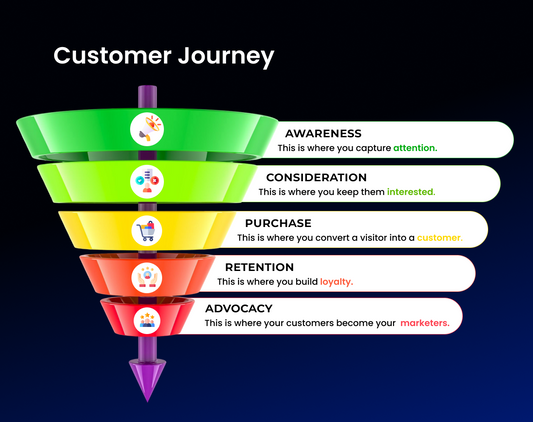
It’s not just about getting a click; it’s about the entire customer journey. It’s about Average Order Value (AOV) optimization, increasing Customer Lifetime Value (CLV), and reducing churn. If you optimize a page to get more add-to-carts but those users never check out, you haven’t improved your conversion rate—you’ve just moved the bottleneck.
True CRO focuses on Revenue Per Visitor (RPV). It asks: How can we make the buying experience so smooth, intuitive, and rewarding that buying feels like the only logical choice—especially when using conversion rate optimization for ecommerce.
Advanced CRO Tactics That Move the Needle
Once your foundation is solid, it’s time to implement the tactics that actually move numbers. These aren’t quick hacks or gimmicks; they’re real improvements that help more people buy without adding friction.
A/B Testing on High-Impact Elements

Don’t waste time testing tiny things no one cares about—focus on the pages that directly affect revenue, like your product pages and checkout. Start by testing your offer: sometimes “Free Shipping over $50” beats “10% Off,” sometimes it doesn’t. Try swapping your hero image, too, because lifestyle photos often convert better than plain product shots. And make sure you’re testing your value messaging; people respond very differently to benefits (“Stays cool in the summer”) than they do to basic features.
This is where a CRO agency can support structured experimentation, but you can also run these yourself.
Heatmaps & Session Recordings

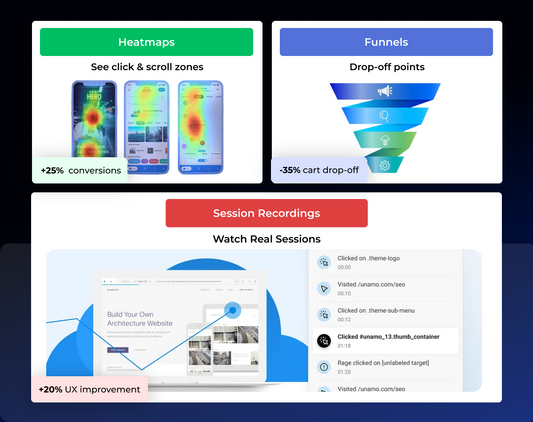
Tools like Hotjar or Microsoft Clarity are basically a window into what your shoppers actually do. Heatmaps show where they click, what they ignore, and what catches their eye. Scroll maps tell you how far people get down the page—and if half your visitors never even reach your testimonials, you know something needs to move up. Watching real session recordings can reveal small frustrations you’d never notice from analytics alone.
Smart Exit-Intent Triggers

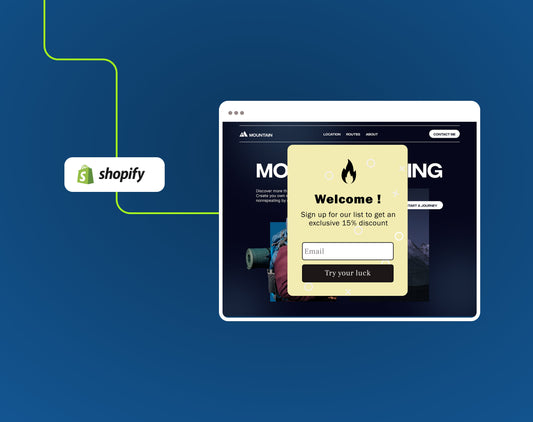
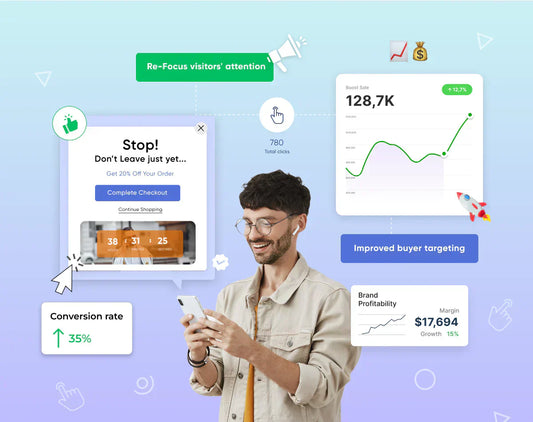
Exit popups only feel annoying when they’re generic or irrelevant. When they’re thoughtful, they can actually be helpful. If someone’s leaving a product page, offer to save the item for later. If they’re exiting from their cart, remind them they’re close to unlocking free shipping. Instead of shouting “Don’t go!” give them something that makes leaving a little harder.
AI-Powered Chatbots

Most people bounce because they can’t find answers fast enough. A good AI chatbot solves that instantly. It can tell shoppers if you ship to their country, how sizing works, or whether a product is in stock—without forcing them to send an email and wait a full day. In 2025, people expect real-time answers, and a smart chatbot keeps them from backing out of the buying process.
Cart Abandonment Recovery Sequences

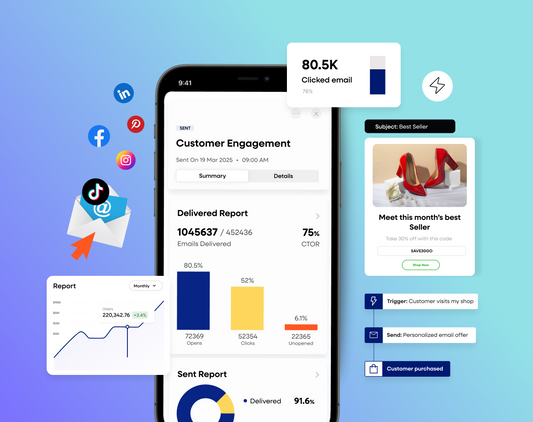
Just because someone leaves doesn’t mean a sale is over. You'll be surprised to see how a simple three-step email sequence can recover a big number of carts. Start by sending a gentle reminder about an hour after they leave your page. Then, next day, follow up with reviews or social proof about the exact item they left behind. Finally, send a small incentive—like free shipping or a few dollars off—to help them finish the purchase.
SMS Abandoned Cart Nudges

Because almost everyone opens their texts, SMS is one of the easiest ways to bring people back. A short, friendly message with a direct checkout link can recover a good chunk of lost revenue. Keep the tone human, not robotic. You know, something that feels like a quick reminder and not a sales pitch.
Push Notifications

For visitors who’ve been to your site before, push notifications can be super duper effective. They’re perfect for price-drop alerts, back-in-stock updates, or reminders about products they looked at earlier. These quick nudges keep your brand top-of-mind and bring shoppers back right when their interest spikes again.
Multi-Language / Multi-Currency Support

If you sell worldwide, showing the right language and currency is a must. A shopper in Canada will trust your site way more if they see prices in CAD instead of USD. Auto-detecting where someone is from and adjusting the experience instantly removes confusion and makes buying feel a lot more comfortable. Localization isn’t fancy anymore—it’s expected.
AI-Powered Tools to Scale CRO With Less Effort
In 2025, AI isn’t just another trendy word, but a big shortcut for getting more done with less manual work. The correct tools can help you test ideas faster, understand your customers better, and make smarter decisions without spending hours digging through data—especially within modern CRO services.
AI Copy Optimizers
Tools like Jasper and ChatGPT can create dozens of headlines or CTA variations in seconds, which makes testing way easier. You can compare emotional angles, logical benefits, short versions, long versions—anything you want—without staring at a blank page. It speeds up the creative process and helps you find winning copy faster.
AI A/B Test Generators
New platforms can now look at your website, analyze your traffic patterns, and automatically recommend what you should test next. Instead of guessing or relying on gut instinct, these tools suggest data-backed ideas that actually make sense for your audience. It removes the hardest part of testing: figuring out what to test in the first place.
Dynamic Personalization
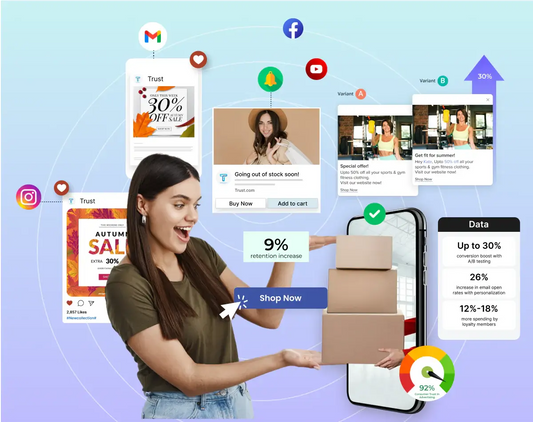
AI can change parts of your site in real time based on who’s visiting. For someone new, it might show best sellers or brand information to build trust. For returning customers, it can show personalized recommendations or new arrivals to boost repeat purchases. This kind of dynamic content makes the experience feel more relevant and increases the chances they'll buy. This is a core part of eCommerce optimization today.
Predictive Intent Scoring
Modern AI tools track how people browse your site and assign each visitor an “Intent Score” at the moment. If someone looks ready to buy but starts to exit, the system can offer a strong incentive to keep them from bouncing. If the intent is low, it might simply ask for their email so you can nurture them later. It’s a smarter way to react to user behavior without guessing.
Automated Heatmap Insights
Instead of looking at hours and hours of session recordings or digging through endless heatmaps, AI can quickly summarize the biggest issues for you.
It can highlight patterns like “People keep getting stuck on the shipping calculator” or “Users aren’t scrolling far enough to see your CTA.” This reduces the time it takes to turn raw data into actionable insights.
Common CRO Mistakes (And How to Avoid Them)
Even the best intentions can ruin conversion rates if executed poorly.
Mistake 1: Testing Too Many Things at Once.
If you change the headline, the image, and the price simultaneously, you will never know which change caused the result.
Fix: Test one variable at a time.
Mistake 2: Ignoring Mobile.
Most founders build and test on desktop, but 70% of traffic is mobile.
Fix: Design for mobile-first. Ensure buttons are thumb-friendly and popups are easily dismissible.
Mistake 3: Optimizing for Clicks, Not Revenue.
A flashy button might get more clicks, but if it misleads users, they won't buy.
Fix: Always measure Revenue Per Visitor (RPV) as your north star metric.
Mistake 4: Copying Competitors Blindly.
Just because Amazon does it doesn't mean it will work for your boutique brand.
Fix: Test based on your customer data, not your competitor's layout.
Conclusion:
Escaping the "Ecommerce Plateau" in 2025 doesn't require a bigger ad budget; it requires a better philosophy. The era of relying solely on top-of-funnel volume is over. Today, the winning brands are the ones that obsess over efficiency—and actively increase conversions through structured CRO practices.
CRO is not a checklist item to be completed and forgotten. It is a continuous cycle of hypothesis, experiment, analysis, and iteration. It is about listening to what your customers are telling you through their clicks, scrolls, and hesitations, and responding with a better experience.
Remember the math of efficiency: Doubling your traffic requires doubling your budget. Doubling your conversion rate doubles your revenue without spending an extra dime on ads. That’s why brands invest in a conversion rate optimization agency or specialists who can optimize Shopify store flows, but you can start applying these principles yourself too.
Your Immediate Next Steps
Don’t let the scope of "Modern CRO" paralyze you. You don’t need to implement AI personalization, complex heatmaps, and SMS flows all at once. Start small to build momentum:
-
Audit Your Data: Open GA4 today and identify your single biggest drop-off point.
-
Launch One Test: Pick that high-drop-off page and A/B test one variable (a headline, a guarantee, or a primary image).
-
Talk to Users: Install a post-purchase survey or read your last 20 support tickets.
The plateau is only permanent if you refuse to adapt. By shifting your focus from "getting more people" to "serving people better,” you transform your store from a leaky bucket into a sustainable, high-growth asset.
The traffic is already there. The revenue is waiting. It’s time to unlock it—with smart, continuous Shopify CRO and site-wide ecommerce conversion rate optimization.
If you want this done for you without the guesswork, Nivara can run your end-to-end CRO setup — from audits to A/B tests to AI-powered personalization — so you can scale faster with data-backed clarity.