
In This Story
McDonald’s did not become such a massive corporation just because they make really good burgers. They became an empire because they figured out how to ask people one simple question at exactly the right time:
"Do you want fries with that?"
That one sentence—and its big brother, "Supersize it"—has generated billions of dollars. This success happened because customers didn't go into the store intending to spend that extra money. However, the main decision to buy a meal was already made. The hard part was over. Spending a little extra didn't feel like a big deal; it was easy, it made sense, and the amount seemed negligible.
That isn’t just luck, that is the original one-click upsell.
Now, let's look at the landscape in 2025. Operating a Direct-To-Consumer (DTC) brand is tough. The cost of customer acquisition (CAC) is skyrocketing. Mark Zuckerberg and ad platforms are taking a massive cut of the money DTC brands make every single day. The competition is fierce.
Most store owners are hyper-focused on getting more people to visit their stores. They think "more traffic" is the answer to everything. The truth is, if you are only thinking about acquisition, you are losing money. You are ignoring the people who have already proven they like your stuff: the customers who just pulled out their credit cards.
You are missing out on a huge revenue opportunity that exists in the split second after the checkout.
What is a One-Click Post-Purchase Upsell?
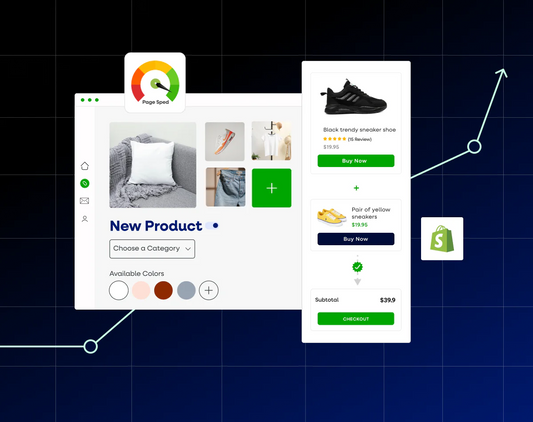
The one-click post-purchase upsell is a specific offer shown to a customer immediately after they have completed their initial purchase, but before they see the "Thank You" or confirmation page.
Unlike standard cross-sells, this offer is unique because it utilizes tokenized payment technology. Since the customer just entered their billing info, they can accept this new offer by clicking a single button. They do not need to re-enter their credit card number or shipping address. It is frictionless.
To understand why this works, you have to understand the specific moment in the user journey. We aren't talking about annoying pop-ups while they browse. We aren't talking about the "Thank You" page (where attention has already dropped to zero).
We are talking about the "waiting room" between clicking "Pay Now" and seeing "Order Confirmed."
The Flow
- The Hard Part: The customer enters their shipping information and credit card details. This is the highest point of friction. They commit to the purchase and press the pay button.
- The Hook: Rather than going straight to a confirmation page, they see a simple, urgent offer: "Wait! Do you want to add a second bottle for 30% off?"
- The impact: If they click "Yes," the item is instantly added to their order, and the payment is processed . No need to add coupon codes, no re-typing addresses.
This utilizes the Shopify Checkout Extensions API to modify the order while it is still open. It is the closest thing to printing free money in e-commerce.
The Psychology: Why We Buy When the Wallet is Open
Why would someone who just spent $100 immediately agree to spend another $30? It isn’t about logic; it is about how the human brain is wired.
1. The Dopamine High
When a customer clicks "Pay," the anxiety of decision-making vanishes, replaced by a rush of dopamine. They feel happy and hopeful about their incoming purchase. At this specific moment, their defenses are down. Their wallet isn't just open; they are psychologically primed to say "yes."
2. The "In for a Penny" Effect
Robert Cialdini calls this Consistency. Once a person makes a decision (buying from your brand), they want to act in a way that is consistent with that decision. They have already decided they trust you. Offering an add-on doesn't feel like a new sales pitch; it feels like a continuation of the decision they just made.
3. Zero Brain Power Required
Browsing a catalog is tiring. You have to compare sizes, prices, and reviews. A post-purchase upsell reduces that mental load. Because it gives the buyers a binary choice: Do you want this matching kit for $10? Yes or No. This process bypasses the logical brain and triggers an impulse buy.
Top 5 One-Click Upsells That Actually Print Cash
Do not overthink the offer. It doesn't need a complex algorithm. It just needs to make sense.
1. The "No-Brainer" Add-On

This is the leather cleaner for the boots, or the batteries for the toy.
You are doing your customer service. If they buy the boots without the cleaner, they don't have the complete solution. Sell them the full package.
2. The "Mystery" Impulse

Got dead stock? Turn it into cash. Offer a "Mystery Accessory" or "Sample Pack" for a low price (e.g., under $10).
People really love to gamble when the stakes are low. Curiosity is what drives the click.
3. The Bulk Buy

This one here is the perfect strategy for products like supplements, skincare, or consumables.
"You bought one jar. That’s a start. Stock up now—add 2 more jars to your order for 40% off."
You get cash , they get a deal. More importantly, you take them out of the market, ensuring they don't buy from a competitor next month because they are stocked up on your product.
4. The Subscription Switch

Turn a one-time buyer into Monthly Recurring Revenue (MRR).
"Upgrade this order to a subscription right now, and we will refund 20% of the purchase you just made."
Recurring revenue is worth 10x more than one-off sales. It is the backbone of a healthy business.
5. The Shipping Refund Hack

If the customer paid for shipping, offer them a product that pushes them over the free shipping threshold, and waive the shipping fee they just paid.
The Offer: "Add these socks for $15, and we’ll refund your $8 shipping charge."
The Raw Take: The customer does the math: The socks essentially cost them $7. They feel like they are winning, and you just increased your Average Order Value (AOV).
One-Click Upsells vs. The Old Way
Why use this technology? Because friction kills conversion.
-
Pre-Purchase (In Cart): This is risky. You are interrupting people while they are trying to pay. It’s like stopping a runner right before the finish line to show them a brochure. You risk losing the original sale.
-
Thank You Page: It’s too late. The dopamine is fading, and the transaction is closed. To buy again, they would have to re-enter their credit card info. No one wants to do that.
-
One-Click Post-Purchase: This is Zero Risk. You have already secured the original sale; that money is in the bank. If they say no to the upsell, you lose nothing. If they say yes, it is pure incremental profit.
How to Screw This Up (Don't Be "That" Guy)
If you get greedy or lazy, you will ruin the customer experience.
1. The "Greedy" Pricing Mistake
Do not try to sell a $500 TV to someone who just bought a $20 HDMI cable. It feels predatory and confusing. The Rule: Keep the upsell price between 20% and 30% of the original order value. It needs to feel like an "add-on," not a new major investment.
2. Relevance is Key
If I buy dog food, do not try to sell me cat litter. This proves you don't know who I am. Use the settings in your app to ensure the offer triggers based on specific collections. If I have dog food in the cart, show me dog treats.
3. Ignoring Urgency
If people can find this exact same deal on your homepage, why should they decide now? The Fix: The offer must say "One-time offer only available on this screen." And you must mean it.
How to Turn This On (Like, Today)
You cannot do this with default Shopify settings; you need an app that utilizes the Shopify Checkout Extensions API.
Step 1: Pick a Tool
-
Zipify OneClickUpsell (OCU): The original. excellent for building complex funnels (e.g., if they say "no" to offer A, show them downsell B).
-
ReConvert: Fantastic for customizing the Thank You page as well.
-
AfterSell: Known for killer mobile optimization.
Step 2: Set the Trigger Start simple. Set a "Global" upsell for your best-selling accessory or a mystery item.
Step 3: Monitor the Take Rate You want a Take Rate between 5% and 15%. If you offer it to 100 people and 10 take it, that is free revenue you generated without spending a dime on ads.
Conclusion: Stop Leaving Money on the Table
In e-commerce, "more traffic" is a vanity metric. "Profit per order" is the sanity metric.
One-click post-purchase upsells are the digital equivalent of asking, "Do you want fries with that?" They solve problems for the customer and drastically improve your unit economics.
If you are not using post-purchase offers, you are essentially taking 10% to 20% of your daily revenue and setting it on fire. You are throwing away money that is already within your reach.